
Your Margin Notes Are a Love Letter to the Story
I need you to understand something before we go any further. I have a copy of *A Court of Silver Flames* that looks like it survived a forensic investigation. There are forty-seven tabs poking out of the pages. Six colors. A margin note on page 312 that just says “HE KNEW. HE KNEW THE WHOLE TIME.” in handwriting so aggressive I nearly tore through the page. And I am not embarrassed. I am proud. Because romantasy annotation culture isn’t a quirky reading habit anymore — it’s a full-blown community practice, a BookTok identity marker, and honestly? It’s the most emotionally honest thing happening in fandom right now.
This is theorycrafting as love language. This is treating every recurring symbol, every too-casual side-character line, every gesture a hero repeats across three books like it’s evidence pinned to a red-string board in your bedroom. And the fact that thousands of us are doing this simultaneously — sharing our marked-up pages like they’re sacred artifacts, debating whether that throwaway mention of iron in chapter four means the love interest is hiding fae heritage? That’s not frivolous. That’s the deepest kind of reading there is.
From Hobby to Identity

Let me take you back to where this started hurting in the best way. BookTok has always been good at surfacing emotional reading experiences. The yearning compilations. The “books that gave me emotional damage” lists. The slow-burn countdowns where someone holds up a novel and whispers “they don’t kiss until page 487 and I am unwell.” But somewhere around 2023, the content shifted. It wasn’t enough to react. Readers started showing their work.
Annotated copies started appearing on camera. Not pristine, not careful. Messy. Obsessive. Someone would fan through a copy of Lola Rock’s [*Pack Darling*](/tag/pack-darling) and every single page had a tab, a margin scrawl, a highlighted line. The comments didn’t say “that’s extra.” The comments said “show me your color key.” Because the color key is everything.
🎨 The Romantasy Annotation Color Key
– 💗 Pink — Romantic tension (the ache, the almost-touches, the loaded silence)
– 💙 Blue — Foreshadowing (anything that smells like a setup for later devastation)
– 💚 Green — Magic system details (rules, limits, costs, loopholes)
– ❤️ Red — Betrayal clues (dialogue that doesn’t quite add up, loyalties that feel performed)
– 💛 Yellow — Lines that made you stop breathing
– 💜 Purple — Side characters acting suspicious
– 🧡 Orange — *MMF-specific:* tracking which member of the dynamic is orbiting closest to the heroine in any given scene and whether that positioning shifts after a confrontation
This has nothing to do with whatever your English teacher was begging you to do with a highlighter. This is page markup as emotional cartography. You’re not summarizing themes. You’re tracking the exact moment your chest tightened, the precise page where a hero’s mask slipped for half a sentence, the specific word choice an author used in chapter six that mirrors something a villain said in book one. You’re mapping your own nervous system onto the text, and then you’re showing it to strangers on the internet who immediately understand why.
@romantasyreads built an entire annotation system around tracking power shifts in MMF dynamics — who speaks first, who touches first, who defers — and her color-coded spreads regularly pull hundreds of thousands of views because people look at them and think *that’s exactly what I feel but couldn’t articulate.* On Reddit’s r/RomanceBooks, a user posted their seven-color key for [*A Court of Silver Flames*](/reviews/a-court-of-silver-flames) and it went semi-viral, spawning a thread where dozens of readers shared their own systems. One Goodreads reviewer described her margin notes as “a conversation with the version of me who hasn’t reached page 400 yet — I’m leaving her warnings.”
Romance and romantasy are leading this trend, and it makes so much sense it almost hurts. These are genres built on emotional architecture. Every glance means something. Every silence between characters who hate each other (but don’t, they don’t, you can tell by the way he keeps positioning himself between her and the door while the other one pretends he isn’t watching both of them) is load-bearing. The readers who gravitate toward enemies-to-lovers, toward slow burn, toward morally grey fae lords and possessive pack alphas who do terrible things but also once wordlessly divided their watch shifts so the heroine could actually sleep? Those readers were already reading like detectives. The margin work just gave them a visible system.
Be honest — your copy looks like this too. Maybe not forty-seven flags deep, but you’ve dog-eared something. You’ve texted a friend a page number with zero context and just “READ THIS LINE AGAIN KNOWING WHAT WE KNOW NOW.” You’re already doing this. The tabs just make it official.
The Hidden Motives Romantasy Heroes Bury in Subtext

Okay here’s where it gets unhinged. And by unhinged I mean “I lost four hours to a TikTok thread about whether Rhysand’s behavior in [*A Court of Mist and Fury*](/reviews/a-court-of-mist-and-fury) was strategic self-sacrifice or emotional manipulation, complete with page citations, and then someone in the comments pivoted to a parallel analysis of the pack dynamics in [*Pack Darling*](/reviews/pack-darling) and I didn’t surface until 2 a.m.”
Romantasy readers don’t just consume plot. They theorize motive. They treat every hero’s action as potentially layered, potentially deceptive, potentially the surface presentation of a deeper emotional truth that the character themselves might not even understand yet. This isn’t random speculation — it’s evidence-based, built on the textual crumbs that most casual readers skim past.
Someone on BookTok will post a video that says “I think the side character in *Daughter of No Worlds* is secretly working against the couple, and here’s my proof.” And then they’ll show four tabbed pages where that character’s dialogue contains the same phrasing as the antagonist’s internal monologue. They’ll point out that the character always enters a scene from the left, which mirrors a spatial pattern the author uses for deceptive figures. They’ll highlight a gift that character gave in chapter nine and connect it to a symbol system established in the prologue.
Is this unhinged? Maybe. Is it also deeply, rigorously attentive reading that most literary critics would envy? Absolutely.
The thing about romantasy is that the genre rewards this kind of scrutiny. Authors like [Carissa Broadbent](https://www.carissabroadbent.com/), [Lola Rock](https://www.lolarock.com/), [Raven Kennedy](https://www.ravenkennedybooks.com/), and [Sarah J. Maas](https://www.sarahjmaas.com/) build worlds dense with recurring motifs. A rose that appears in three different scenes isn’t just a rose. A character who touches their collarbone every time they lie isn’t just fidgeting. A dagger gifted in book one that reappears in book three’s climax isn’t just Chekhov’s gun — it’s a love confession encoded in steel. And in MMF dynamics, this multiplies: a gesture one love interest makes that mirrors what the other did two chapters ago isn’t coincidence, it’s the author showing you these two people are learning each other through how they love her. The readers who catch these patterns before the reveal lands? They feel like they cracked a code. Because they did.
Why Theorycrafting Feels Like Emotional Survival
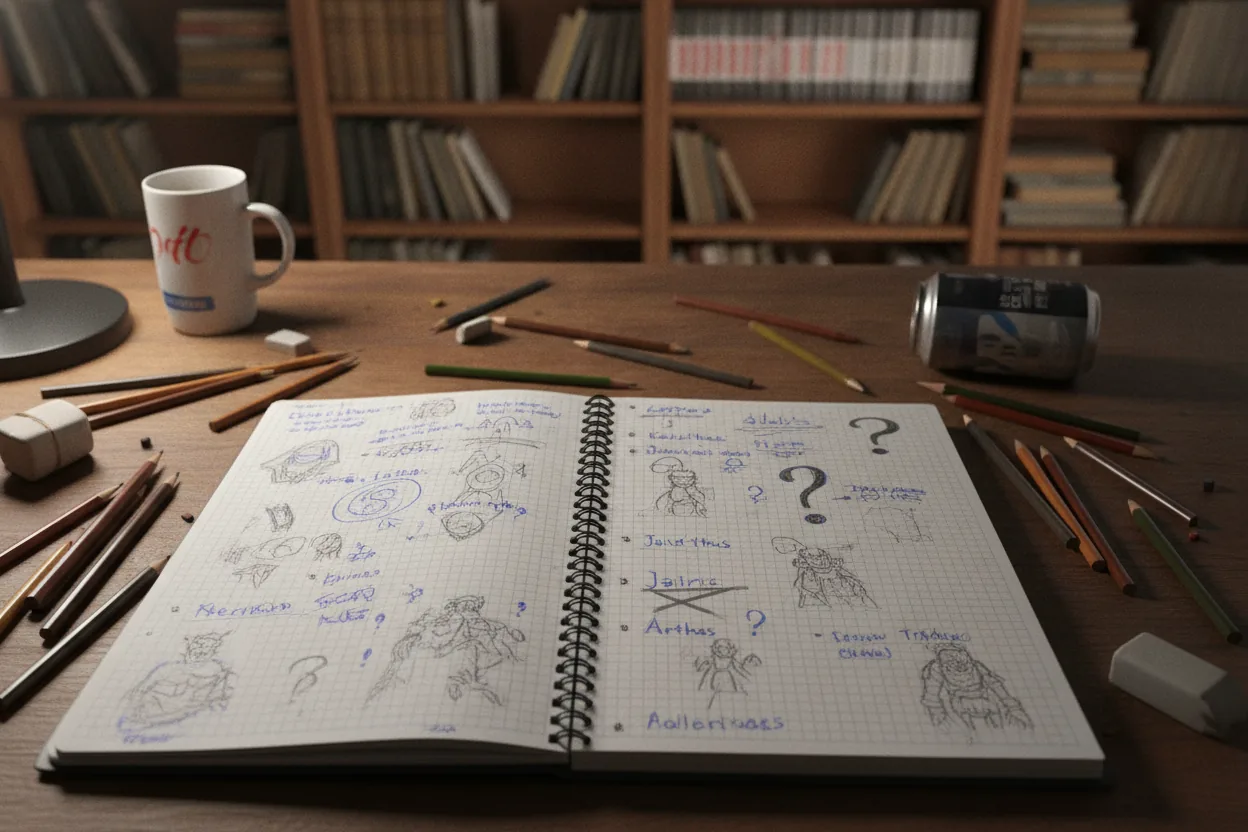
Let’s get real about why this means everything to us. And I’m saying “us” because I am fully in this. I have a Pinterest board called “Suspect Character Behavior” that is just screenshots of annotated pages with question marks drawn next to side-character dialogue. I am not outside this phenomenon. I am exhibit A.
Theorycrafting around hidden motives romantasy heroes bury in subtext isn’t just intellectual play. It’s emotional protection. When you’ve been burned by a plot twist you didn’t see coming, when a hero turned out to be genuinely terrible and not redeemable-terrible, when a ship you invested 600 pages in got sunk by a third-act betrayal that felt like it came out of nowhere? You start reading differently. You start looking for the signs. You start annotating not just what you felt but what you suspect. You build a case file because you need to know: is this hero safe to love?
And in MMF? The stakes triple. You’re not just tracking one love interest’s loyalty — you’re tracking the dynamic between all three. You’re asking whether the tension between the two male leads is genuine friction or engineered misdirection. You’re noting which one defers to the other in public versus who reaches for her first in private. You’re color-coding these interactions because the truth of the relationship lives in the pattern, not in any single scene.
That’s the real engine behind this trend. It’s not academic. It’s not aesthetic (though the aesthetic is gorgeous and I will defend a perfectly color-coded spread until I die). It’s self-preservation dressed up as fandom practice. We theorize because we care too much to be surprised. We track recurring symbols because we’ve learned that authors hide the truth in patterns, and if we can see the pattern before page 400, we can brace ourselves. Or, even better, we can be right. We can sit in the comments section and say “I CALLED IT on page 73, look at my tab, the green one, I wrote ‘this man is lying about his bloodline’ and I was RIGHT.”
That feeling? That’s better than any plot twist. That’s the reader becoming an active participant in the story’s architecture. That’s the margin work transforming from note-taking into narrative co-creation.
The Clue Map: How Readers Build Cases for Character Loyalty

I need to show you what a real theorycrafting deep-dive looks like, because if you haven’t seen this in action, you’re missing the most passionate corner of BookTok.
Take an MMF romantasy series where the heroine is caught between two love interests — or more accurately, where two love interests are caught in each other’s orbit because of her, and nobody’s admitting what that really means yet. In a straight reading, you might vibe with one or the other based on trope preference. But in this community? Readers are building comparative loyalty maps.
They’ll track every instance where one hero makes a promise and compare it to whether that promise is kept by the end of the chapter. They’ll note the other’s body language in group scenes — specifically when he’s watching not just the heroine but his rival, and what his face does when the rival touches her. They’ll catalog gifts, noting whether a gift serves the giver’s agenda or the receiver’s actual need. They’ll mark every time a side character references one love interest but not the other, tracking whose name gets dropped in political conversations versus intimate ones.
You’re doing this too, right? Tell me you’ve noticed a pattern in a scene and immediately flipped back fifty pages to confirm it. Tell me you’ve whispered “I knew it” at a book at midnight. This is all of us.
This is ship analysis as forensic science. And it leads to some of the most electric comment-section debates I’ve ever witnessed. Someone will post their clue map and caption it “I don’t trust the golden prince and here are 23 textual reasons why,” and the responses will be paragraphs long, citing counter-evidence, offering alternative interpretations of the same scenes, and occasionally descending into all-caps disagreements about whether a specific line of dialogue constitutes emotional manipulation or protective instinct.
These aren’t shallow takes. These are close readings powered by genuine emotional investment. The readers doing this work care about these characters the way you care about a friend whose new partners give you a weird feeling you can’t quite name. They’re watching. They’re noting. They’re building a case.
Side Characters Under the Microscope
And it’s not just the love interests. Side characters in romantasy are getting the full investigation treatment, and honestly, they deserve it, because side characters are where authors hide their best secrets.
The best friend who always seems to know too much. The mentor figure whose advice consistently steers the heroine away from discovering something specific. The court advisor who speaks in metaphors that, on a reread, are clearly coded warnings. The sibling whose loyalty is stated but never demonstrated. The pack member whose protectiveness reads differently on a second pass. These are the characters that this community has turned into suspects on a case board, and the theorycrafting around them is some of the most creative fan analysis I’ve ever seen.
I watched a TikTok last week where someone had created an actual suspect board for the side characters in Lola Rock’s [*Pack Darling*](/reviews/pack-darling). Sticky notes. String. Printed-out quotes taped to a corkboard. They were tracking which pack member had access to information at key plot points and cross-referencing it with which member benefited when the heroine was isolated from the others. It was conspiracy-theory energy applied to an MMF romantasy novel and it was brilliant. The comments were full of people adding their own evidence. “DID YOU NOTICE that Dante uses the word ‘mine’ differently in chapter eleven than Cole does, and when you map every instance across both books the pattern reveals who actually shifted his behavior first?” Yes. Someone noticed. Someone always notices.
This is what the practice has built. A collective intelligence network for romantasy readers who refuse to take any textual detail at face value. And the thing is, they’re often right. Authors do plant these seeds. The payoff might be two books away, but the seeds are there, and the readers who find them first become community authorities. Their marked-up pages get shared, screenshotted, referenced. Their theories become community canon until the next book confirms or denies them.
The Spicy Confrontation Between Reading and Performance
Now. I need to talk about the tension, because it’s real and it’s worth being honest about.
There’s a strain of criticism that says annotation culture on BookTok isn’t really about reading deeply. It’s about performing reading. It’s about the aesthetic of those little colored markers poking out like a cry for help, the visual appeal of a rainbow-coded book spine, the content value of showing your pages to a camera. And that criticism isn’t entirely wrong. Some content is clearly created for visual impact first and reading engagement second. Someone buying a brand-new hardcover specifically to annotate it on camera, using color-coordinated supplies that happen to match their room decor, might be engaging more with the aesthetic of reading than with the text itself.
But here’s where I push back, hard. Who cares? Who actually cares if someone’s entry point into close reading is the desire to make a pretty TikTok? The result is the same. They’re in the text. They’re paying attention. They’re noticing things. And once you start noticing, you can’t stop. The aesthetic might be the gateway, but the obsession is real. I know this because I started annotating because I saw someone’s beautiful tab spread and thought “I want my books to look like that.” And now I have a theory about the blood magic symbolism in *Kingdom of the Wicked* that I’ve been refining for eight months, and a parallel theory about the scent-marking patterns in [*Pack Darling*](/reviews/pack-darling) that I will present with evidence upon request. The performance became the practice. The practice became the passion. The passion became this article.
You already know the drill. Someone finds out you read romance and suddenly you’re defending your entire literacy. The annotation thing? It’s armor against that. Every clue map and theory post and suspect board is a reader saying *look at how closely we read, look at how much we gather, look at how seriously we take these stories* — without ever having to make the argument out loud. We’re proving that this genre inspires the same depth of engagement that supposedly “serious” fiction does. Maybe more, because we’re doing it for love, not for a grade.
Three MMF Romantasy Series That Reward Obsessive Page Markup
If you want to put this into action — if you want books that are genuinely built for theorycrafting and clue-hunting and side-character suspect boards — here are three MMF romantasy series that will destroy your tab supply and your sleep schedule.
First: [*Pack Darling* by Lola Rock](/reviews/pack-darling). This is ground zero for MMF annotation obsession, and the community around it proves why. The pack dynamics create a web of competing loyalties, hidden vulnerabilities, and power shifts that practically beg for color-coded tracking. Who in the pack is genuinely prioritizing the heroine’s safety versus their own status? Which gestures are authentic and which are performance? The moment in book one when you realize Dante’s reaction to the heroine’s injury doesn’t match what he says about her three chapters later — @romantasyreads caught that discrepancy and posted an annotated spread that got 400K views and spawned a theory thread that lasted weeks before book two confirmed half of it. The readers annotating this series are doing relationship forensics, and the debates in the comments are some of the most emotionally charged ship arguments on BookTok. Start here. Bring six colors minimum.
Second: [*Gild* by Raven Kennedy](/reviews/gild-raven-kennedy) (and the full *Plated Prisoner* series). This series is a page-markup goldmine. The magic system, the political alliances, the true nature of certain characters — Kennedy layers her foreshadowing so densely that rereaders regularly post annotated spreads showing how a single metaphor in book one predicts a major reveal in book four. The side characters in this series are especially worth tracking. There are figures whose allegiances are deliberately ambiguous across multiple books, and the theorycrafting community has built some of the most detailed suspect boards I’ve ever seen. The moment the community collectively realized that Slade’s gilded references in *Gild* were doing double linguistic duty — @faborneofgold broke that down in a TikTok that had people physically pulling their copies off shelves at midnight to re-tab the relevant pages. If you want a series that rewards close reading with genuine payoff, [start here](/reading-guides/plated-prisoner-series).
Third: [*Bonds of Cupidity* by Raven Kennedy](/reviews/bonds-of-cupidity) for a lighter but equally layered MMF dynamic, or [*Captive of the Horde King* by Zoey Draven](/reviews/captive-of-the-horde-king) if you want a series where the power dynamics between characters shift in ways that demand tracking. In *Captive*, the motivations of the secondary horde leaders are never fully transparent, and on a reread with margin notes, you’ll catch loyalty cues hidden in dialogue patterns that you absolutely missed the first time. The romantic tension between characters operates on a level where every physical gesture is a political statement. The readers who track the body language shifts across books — specifically, the evolution of who initiates contact and what that means about the internal power negotiation — are the ones who see the endgame forming long before it arrives. The theorycrafting around the horde’s internal politics has its own dedicated hashtag, and honestly, the evidence walls these readers build deserve museum exhibition.
The Catharsis of Being Right Together
Here’s the part that makes me want to cry in the best possible way. The real magic of this whole unhinged, beautiful practice isn’t the individual work. It’s the collective confirmation.
When a book finally drops and a theory you’ve been building for months turns out to be correct? When the side character you flagged on page 47 of book two is revealed as a traitor in book four and your annotated page gets reposted by thirty people saying “SHE CALLED IT”? When the hidden motive you tracked through recurring flower symbolism and mirrored dialogue turns out to be exactly what the author intended? That moment is pure, uncut emotional catharsis. It’s the payoff for every hour spent with a pen in your hand and a tab between your teeth, reading at 2 a.m. because you just realized the hero used the same phrase in chapter fifteen that the villain used in the prologue and you need to check if it happens a third time.
When @packmomtheorist posted the page-by-page comparison proving that the pack hierarchy in *Pack Darling* physically mirrors itself around the heroine differently after the book-two confrontation scene — and then book three opened with exactly that dynamic made explicit — the comment section became a celebration. Not an “I told you so.” A communal exhale. Hundreds of people who’d been tracking the same thread, who’d been building parallel cases in their own copies, finally seeing confirmation that the pattern was real.
This is community love at its most powerful. It’s not about being smarter than other readers. It’s about being obsessed together. It’s about building a shared language of evidence and interpretation that makes the reading experience richer, deeper, more connected. When someone posts their clue map and I see a detail I missed, I don’t feel inferior. I feel grateful. They gave me a new lens. They made the book bigger. They turned a story I already loved into a puzzle I get to solve alongside people who care about it as much as I do.
And that’s why I’ll keep at it. That’s why my copy of every romantasy I love will continue to look like a crime board. That’s why I’ll keep posting my tabbed pages and writing margin notes in handwriting that gets more unhinged with every chapter. Because this isn’t just reading. This is how we love stories now. With evidence. With obsession. With forty-seven tabs and a theory we’re willing to defend in the comments until 3 a.m.
And honestly? I wouldn’t have it any other way.