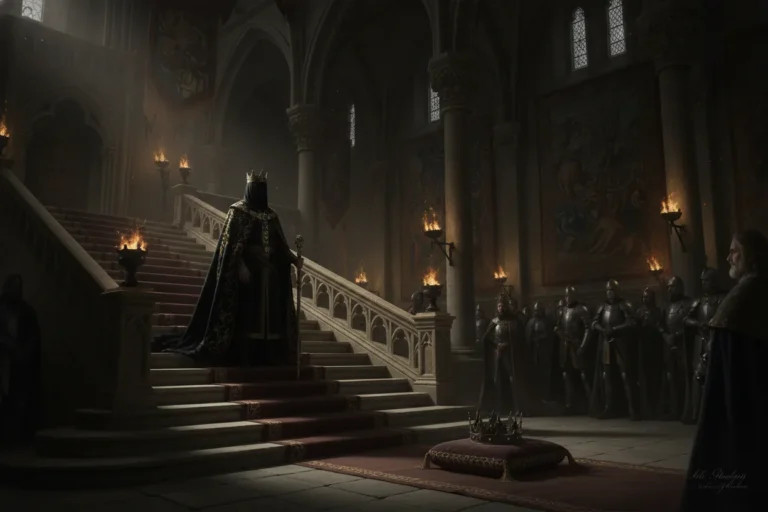

Three Bodies, No Exit: Why MMF Fae Slow Burns Hit Hardest
The line that wrecked me wasn’t during a battle or a confession. It was in a kitchen. In Camille Darkwood’s *Thorns Between Us*, two fae males who’d been circling each other with knives drawn for three hundred pages, now stuck in a safe house the size of a large closet, and the one who’d sworn a blood oath to deliver the other to the enemy court says, while handing him a plate: “I made enough for two because I keep forgetting you’re not mine to feed.” That’s it. That’s the forced proximity moment that made me put my phone face-down on the bed and stare at the ceiling. Because the tension didn’t come from the trope. It came from the structure refusing to let either of them leave.
Forced proximity in 2026 isn’t a trope anymore. It’s a pressure system. And if you’ve been deep in romantasy BookTok or scrolling Threads discourse at 1 a.m., you already know the real conversation isn’t “does forced proximity work?” It’s which version of it actually earns the slow burn versus which version feels like someone built a trope Jenga tower for the algorithm.
Let’s get into it. All of it.
Forced Proximity as a Structural Multiplier, Not a Standalone Trope

Here’s what shifted. Five years ago, “forced proximity” was a tag you slapped on a book where two characters got stuck together. Snowstorm cabin. Spaceship. Portal fantasy with one safe zone. The proximity itself was the engine, and everything else was window dressing.
Now? It’s almost never alone. It’s the skeletal frame that other tropes hang from. Fake marriage. One apartment. Workplace rivals. Escort mission. Bodyguard assignment. The confinement doesn’t generate tension on its own anymore — it holds the tension in place while the second trope does the aching, devastating character work. Think of it like a corset for the plot. The audience knows what a corset does. You can’t move. You can’t breathe wrong. And every small gesture feels enormous because there’s nowhere to go.
This is what makes MMF forced proximity in fantasy romance so devastating. You’re not dealing with two people avoiding each other across a hallway. You’re dealing with three people whose power dynamics, desire lines, and loyalty fractures are all compressed into whatever space the world has locked them into. A fae court chamber. A caravan crossing enemy territory. A blood-bonded contract apartment that literally won’t let them leave until the spell resolves. The geometry of three bodies in a space built for avoidance is inherently more volatile. Every glance has a witness. Every whispered conversation has someone on the other side of a thin wall, listening and pretending they’re not.
And when you layer enemies-to-lovers onto that? When two of the three started on opposite sides of a war, and the third is the reluctant bridge between them? The confinement doesn’t just prevent escape. It forces reckoning. You can’t hate someone the same way when you’ve watched them sleep with their guard down for forty consecutive nights.
If you’re building your enemies-to-lovers TBR, our [enemies-to-lovers fae romance roundup](/enemies-to-lovers-fae-romance) is a good place to start stacking your shelf.
Fake Marriage: The Slow Burn That Comes Pre-Loaded

Of all the forced proximity subtypes dominating romantasy right now, fake marriage (or marriage of convenience, or magical contract binding, or whatever your preferred fae court calls it) consistently delivers the strongest slow-burn payoff. And the reason is structural, not just vibes.
A fake marriage gives characters a practical, defensible reason to stay close while simultaneously giving them a built-in reason to deny their feelings. The relationship has a label before the emotion does. They’re “married” for political alliance, for inheritance protection, for hiding from an assassin’s guild, whatever. The point is: the intimacy is mandated. The feelings are not. And that gap between what’s required and what’s real is where every devastating moment lives.
In MMF configurations, this trope explodes. K.A. Linde’s *The Wren in the Holly Library* plays with similar contract-binding energy, and if you want the full court-marriage pressure cooker, Elise Kova’s *A Deal with the Elf King* demonstrates how beautifully mandate-versus-want can fracture a character open — now imagine that fracture times three. In a three-way political marriage between rival court heirs, each pairing within the triad carries a different origin of animosity. One pair were childhood rivals. Another pair had a betrayal in their history. The third pair have never met but have been raised to despise each other’s houses. Now they share quarters. Now they attend state functions together. Now one of them gets injured in a border skirmish and the other two have to decide, publicly and in front of an entire court, how much they care.
The reason fake marriage earns its slow burn better than almost any other proximity setup is that it’s got a visible ticking clock and a clear tripwire. The characters know the arrangement is temporary (or do they?). They know they shouldn’t be feeling what they’re feeling. And every domestic detail — every morning where someone makes tea for three without thinking, every night where the sleeping arrangement drifts from careful distance to tangled limbs — is a tiny betrayal of the original terms. You’re watching people fall in love inside a contract that was designed to prevent exactly that.
The spicy line I keep coming back to, from *Thorns Between Us*: “The vows were for the kingdom. The way I say your name when no one’s listening is for me.” I’m never recovering from that.
One Apartment, Shared Space, Zero Escape Hatches
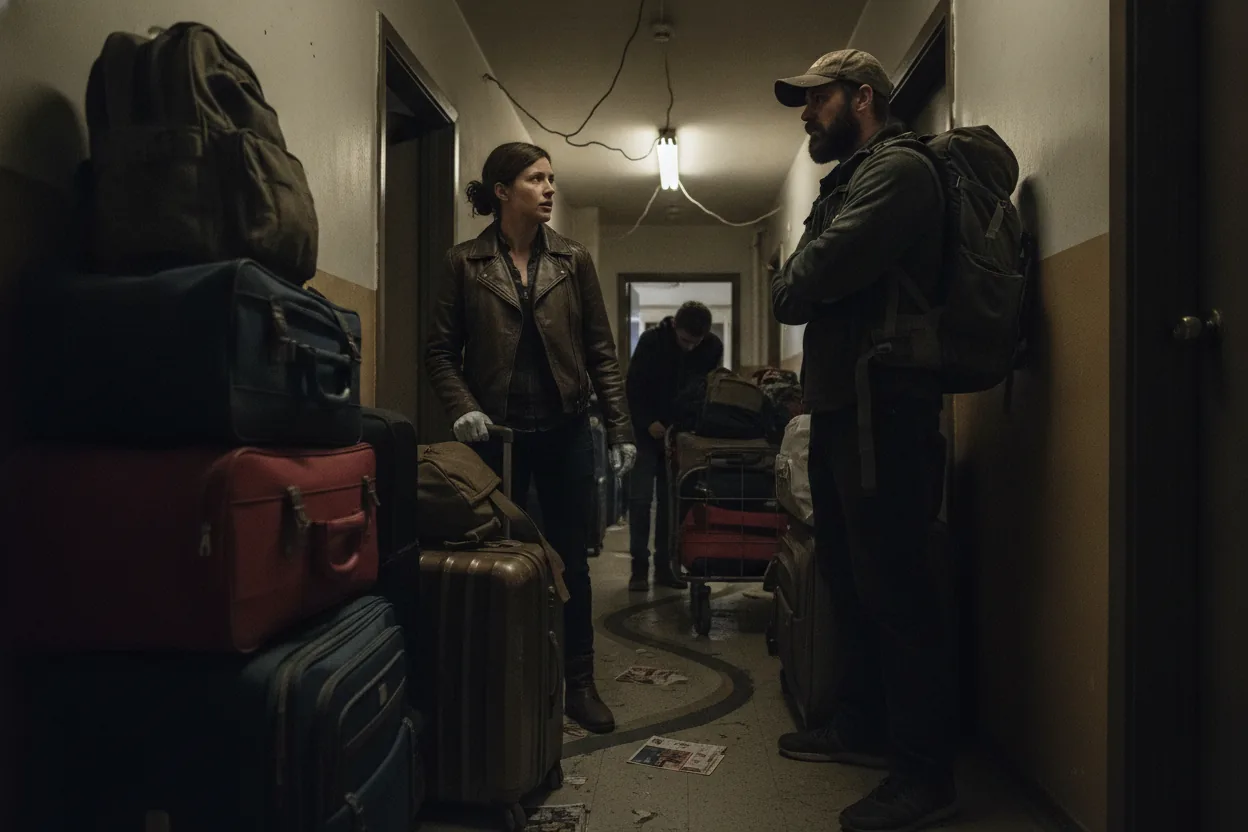
If fake marriage is the slow burn with the longest fuse, the one-apartment setup is the one with the shortest distance between detonation points. There’s no ceremony. No contract. No political justification. Just three people and not enough rooms.
What makes shared-space proximity so effective in romantasy is that it turns the mundane into the erotic. Not in a gratuitous way (though yes, also in a gratuitous way). In a structural way. When characters can’t leave, the things they’d normally do in private become shared experiences. Bathing. Sleeping. Eating. Changing clothes. Sitting with the raw, unprocessed mess of themselves. The apartment or safe house or enchanted tower becomes a fishbowl, and every character is simultaneously the observed and the observer.
For MMF, this is where the “who sleeps where” tension does its most vicious work. It’s not just “only one bed.” It’s only one bed and three people who’ve all been pretending they don’t notice the way the other two look at each other. It’s the moment someone falls asleep on someone else’s shoulder and the third person watches it happen and feels something crack open in their chest they’ve been trying to keep sealed. If you haven’t read Kathryn Ann Kingsley’s *The Impossible Julian Strande*, it does this fishbowl energy with a gothic intensity that’ll ruin you for lesser confinement setups.
The strongest shared-space books I’ve read in 2026 romantasy don’t use the apartment as a gimmick. They use it as a crucible. The walls are the world. The characters can’t deflect into plot because the plot is what trapped them here, and now they have to sit with each other and with whatever’s growing between them. That compression isn’t cute. It’s claustrophobic. And the slow burn becomes less about “when will they kiss” and more about “when will someone finally say the thing they’ve been choking on for six chapters.”
The debate around shared-space setups is whether they can sustain a full-length novel or whether they work better as a contained section within a larger plot. I’ve seen convincing arguments both ways, but the books that commit fully to the bottle-episode energy — where the apartment IS the plot for 200 pages — tend to hit harder even if they feel smaller in scope. The constraint is the point. Remove the escape hatch and you get honesty, because honesty is what happens when people run out of room to perform.
Escort Missions and Bodyguard Proximity: Tension on a Moving Map

Now here’s where the discourse gets interesting, because escort missions and bodyguard-adjacent plots are doing something structurally different from the other proximity types, and it’s not getting enough attention.
Fake marriage and shared apartment proximity are static. The characters are locked in a location or a status. Escort missions are dynamic. The characters are locked in a relationship, but the setting keeps changing. They’re crossing enemy territory. They’re moving through checkpoints. They’re sleeping in different safe houses every night. The proximity is constant but the context keeps shifting, which means the tension has to keep reinventing itself.
In MMF romantasy, this looks like three characters on a quest where one is the protector, one is the asset, and one is the wildcard whose loyalties aren’t clear. The power dynamics rotate based on who’s most useful in each new environment. The fae warrior who’s dominant in combat becomes vulnerable when they cross into a territory where their magic doesn’t work. The court diplomat who seemed soft suddenly becomes the only one who can talk them through a checkpoint. The shifting competence creates shifting attraction, and that compression ensures every shift is witnessed and felt by all three.
This is also where enemies-to-lovers does its nastiest work. Two of the three might be enemies. But when you’re three weeks into an escort mission through the Thornwild and one of them takes a poisoned arrow meant for the other, the enmity doesn’t just soften. It breaks. And it breaks in real time, in shared space, with the third person watching it happen and realizing they’re in love with both of them. Sarah J. Maas’s *A Court of Mist and Fury* isn’t MMF, but the “protecting someone through dangerous territory while the hate dissolves” dynamic it nails is the exact engine that MMF escort plots run on — just tripled.
The bodyguard variant is slightly different because it’s got a built-in power imbalance. One person’s job is to protect. One person’s job is to survive. And in MMF, the third person is either a second protector — which creates competition and mirrored devotion — or a second protected person, which creates shared vulnerability. Either way, the dynamic resists the easy resolution that two-person proximity allows. There’s always a third line of tension keeping things from resolving too cleanly.
For more on how the bodyguard dynamic plays in fae settings, check our [MMF fantasy romance recommendations guide](/mmf-fantasy-romance-recommendations).
The Trope-Stacking Problem: When “More” Stops Meaning “Better”
Look — trope stacking has a diminishing returns problem, and forced proximity is often the trope that gets buried under the pile.
You’ve seen the books. Forced proximity. Enemies to lovers. Fake dating. Only one bed. Fated mates. Touch her and die. Grumpy/sunshine. All in one book. All tagged in the description. All theoretically present. And somehow none of them land because the story’s so busy cycling through setups that it never sits with any of them long enough for the tension to actually build.
The slow burn needs runway. It needs chapters where nothing happens except two people existing near each other and slowly, agonizingly losing the ability to pretend they don’t want to close the distance. When you stack six tropes into 350 pages, each trope gets maybe 50 pages of development, and the slow burn becomes a speed bump. The fake marriage is introduced and resolved in three chapters. The one-bed moment lasts one scene. The enemies-to-lovers arc goes from “I’ll kill you” to “I’d die for you” in a single plot twist. Nothing breathes.
The strongest forced proximity books in 2026 — the ones readers are rereading and building Pinterest boards around and debating in Threads at 2 a.m. — are the ones that pick one proximity structure and commit to it so fully that it becomes the story’s entire emotional architecture. They might have a secondary trope, sure. Fake marriage plus enemies to lovers is a proven combination because the two tropes actually reinforce each other structurally. But fake marriage plus enemies to lovers plus only one bed plus fated mates plus grumpy/sunshine plus “who did this to you” plus touch her and die? That’s not a romance. That’s a trope checklist wearing a plot’s skin.
The debate isn’t really about whether trope stacking works. It’s about whether the stacking is character-driven or marketing-driven. When a reader finishes a book and says “the fake marriage felt earned,” they mean the characters’ behavior within the confinement made sense — that the reasons they denied their want were rooted in who they are, not just in what the premise required. When a reader says “this felt trope-stacked for clicks,” they mean the opposite. The premise did all the work. The characters just stood inside it.
The Fae Enemies-to-Lovers Moment That Proves the Hierarchy
Let me give you the scene. Because theory is fine but this trope conversation lives and dies in specific moments.
Two fae lords. Blood enemies. Third partner is a mortal scholar bound to both of them by a translation contract neither of them fully understood when they signed it. They’re stuck in a mountain keep for the winter because the passes are blocked by wild magic. Classic shared-space proximity. No escape hatch. Three months minimum. This is from Darkwood’s *Thorns Between Us* again, and it’s the scene that lives rent-free in every corner of my brain.
The first month is knives-out hostility. The second month is grudging cooperation because the keep’s wards are failing and they need all three of their magic systems working together to keep the walls standing. The third month is when one of the fae lords gets hit with a curse that makes him relive his worst memory on a loop every night, and the only thing that stops it is physical contact with someone he trusts.
He doesn’t trust either of them. He trusts the mortal scholar slightly more, but the other fae lord is the one who figures out the counter-sigil. And the moment — the actual moment — is the enemy fae lord sitting on the edge of the bed, drawing the counter-sigil on the cursed one’s chest with his fingertip, and saying: “I’m not doing this because I care. I’m doing this because if you die in your sleep I’ll have to carry your body down the mountain and I refuse to touch you that long.”
And the mortal scholar, watching from the doorway, whispers: “You’ve been touching him for twenty minutes and you haven’t noticed.”
That’s the hierarchy. That’s why shared-space proximity, committed to fully, with enemies-to-lovers as the engine and a third-person witness to crack the denial open, beats every other configuration. The tension isn’t manufactured. It’s inevitable. The structure made it impossible for them to keep pretending, and the moment of collapse is more devastating because they all know it’s been coming and none of them could stop it.
Which Setup Creates the Strongest Slow-Burn Payoff
Rankings time. And I know rankings are reductive but I also know you want them, so here’s how the forced proximity subtypes stack up for slow-burn payoff in MMF romantasy specifically.
Fake marriage takes the top position because it’s got the longest runway and the most built-in reasons for denial. The payoff, when it comes, is the characters choosing each other for real inside a structure that was supposed to be performance. The moment the fake becomes real is the most cathartic beat in all of romantasy, and in MMF it hits three times because each pairing within the triad has to cross that threshold separately.
Shared-space/one-apartment takes second because it’s the most intense per page but harder to sustain across a full series. The payoff is raw and immediate — the domestic intimacy turning real — but it risks burning too hot too fast if the author doesn’t control the pacing.
Escort mission takes third because the dynamic proximity creates incredible tension but the changing settings can dilute the slow burn if the plot demands too much action. The payoff is usually tied to a moment of vulnerability during danger, which is effective but can feel externally driven rather than internally earned.
Workplace rivals is the most TikTok-shareable but often the weakest in full-length romantasy because the professional stakes can feel low compared to fae courts and blood magic. It works best as a contemporary or urban fantasy setup.
The three tropes most similar to forced proximity’s function are: fated mates (external force preventing separation), secret relationship (intimacy under constraint), and found family (gradual trust built through shared space). All three create the same core dynamic — characters who can’t leave, and therefore must reckon with what they feel.
The Real Test Is Whether You’d Reread the Quiet Scenes
Here’s my final, unscientific, deeply biased metric for whether a forced proximity setup worked: do you reread the quiet scenes? Not the spicy ones. Not the battle. Not the confession. The scene where they’re just existing in the same room and the tension is so thick you can feel it in your own chest.
If you reread the scene where someone makes tea. If you reread the scene where someone falls asleep first and someone else pulls a blanket over them. If you reread the scene where two of them are arguing about something pointless and the third one watches with an expression that says everything neither of them will say out loud. That’s when the proximity worked. That’s when the structure earned its slow burn.
Everything else is just furniture.
If this lit something in you, [sign up for the Romantasy Refuge newsletter](/newsletter) — we send recs, discourse, and the occasional unhinged scene analysis straight to your inbox every week.