The Trope Compass: Finding Your Next Romantasy Obsession
I need to tell you about the dynamic that is wrecking me harder than anything I’ve touched in the last three years. It’s not enemies-to-lovers. It’s not even forced proximity, though both of those are permanent residents in my heart. It’s villain redemption stacked on top of shadow-daddy energy, and the specific flavor I mean is: he has done objectively terrible things, he knows it, he doesn’t apologize for it, and then one person walks into his orbit and he becomes so violently soft that the reader’s entire chest caves in. That’s the hit. That’s the one. And I’ve been chasing it through every romantasy recommendation map I can build because I know I’m not the only one standing in a bookstore at 9 PM thinking “I need something very specific and I need it now.”
And I know you’re chasing the same thing — that’s why you’re here instead of scrolling past another generic “best fantasy romance” listicle. Nobody in 2026 is browsing for “good romantasy.” That phrase means nothing. What you want is a feeling. You want the specific tension of two people who shouldn’t want each other being shoved into a situation where they can’t stop wanting each other. You want the slow unraveling. You want the moment he calls her by her first name instead of her title and the whole kingdom shifts. Romantasy trope recommendations aren’t a genre exercise. They’re emotional precision instruments. So let’s get precise.
Enemies-to-Lovers Romantasy That Earns the Payoff

The problem with most enemies-to-lovers recommendations is that the “enemies” part lasts forty pages. Someone snarks at a ball. Someone gets pinned against a wall. By chapter six they’re making out and the tension is already spent. That’s not enemies-to-lovers. That’s mild-inconvenience-to-lovers.
What Separates Real Enemies-to-Lovers from a Bad First Impression
The books that deliver on this setup treat the hatred as load-bearing architecture. The animosity isn’t a misunderstanding. It’s political. It’s personal. It’s rooted in something real, like one of them killed the other’s family, or one of them represents an empire that colonized the other’s homeland, or they’re on genuinely opposing sides of a war and neither one is wrong. That’s when banter stops being cute and starts being a survival mechanism. That’s when every moment of softness costs something.
Books That Make You Earn Every Inch of the Payoff
Carissa Broadbent’s [*War of Lost Hearts*](https://bookshop.org/p/books/war-of-lost-hearts-carissa-broadbent/19876825) does this with a ruthlessness I wasn’t prepared for. Two people on opposite sides of a magical conflict, both carrying real ideological conviction, both slowly realizing that their enemy is the only person who truly sees them. The payoff doesn’t arrive until it’s been earned through pages of genuine conflict, and when it does, you feel it in your teeth. Similarly, if you haven’t touched Elise Kova’s [*A Deal with the Elf King*](https://bookshop.org/p/books/a-deal-with-the-elf-king-elise-kova/16229498), the enemies-to-lovers tension there is laced with forced proximity and a marriage of convenience, which means you’re getting a triple-engine setup that builds pressure from page one.
What makes enemies-to-lovers the conversion dynamic — the one that turns casual fantasy readers into people with dedicated Kindle libraries — is that it promises the longest possible tension arc. You’re not just waiting for them to get together. You’re waiting for them to *admit* they want to. And the distance between those two moments is where the entire emotional hit lives.
Fake Marriage Romantasy as a Slow-Burn Pressure Cooker

Let me explain why fake marriage works as a tension engine in a way nothing else does. It guarantees proximity. It guarantees performance. It guarantees that two people who are not together have to act like they are, in public, in private, in front of courts and councils and fae lords who can smell a lie. And inside that performance, the real feelings start growing like roots cracking through stone.
When the Performance Stops Being a Performance
The structural genius of fake marriage is that the tension isn’t “will they get together?” The tension is “when will the act stop being an act?” Every shared bed becomes a question. Every public touch becomes evidence. Every moment where he puts his hand on the small of her back for appearances and then doesn’t remove it when no one’s watching becomes a confession neither of them has made out loud. That non-removal — that tiny rebellion against the terms of their arrangement — is where fake marriage romantasy lives and breathes.
Holly Black’s [*The Cruel Prince*](https://bookshop.org/p/books/the-cruel-prince-holly-black/6692952) series runs adjacent to this energy, but for the purest fake marriage romantasy delivery, Elise Kova’s [Married to Magic series](https://bookshop.org/p/books/a-deal-with-the-elf-king-elise-kova/16229498) and Katee Robert’s [*Court of the Vampire Queen*](https://bookshop.org/p/books/court-of-the-vampire-queen-katee-robert/18761857) scratch this itch with intention. The marriage of convenience setup in *A Deal with the Elf King* is particularly effective because the heroine doesn’t want to be there. She didn’t choose this. And watching her go from resentment to curiosity to something far more dangerous is the kind of slow-burn trajectory that makes you flip pages at 2 AM with your phone brightness at minimum so your roommate doesn’t know you’re still awake.
What readers are asking for when they ask for fake marriage isn’t just the framework. They’re asking for the very specific ache of watching two people pretend, knowing that the pretending is the only safe way for them to feel what they’re feeling. Don’t call this a plot device — it’s a pressure system. And the best romantasy writers in this lane know it.
Forced Proximity Fantasy Romance and the One-Bed Engine

Forced proximity is the workhorse of romantasy, and I mean that as the highest compliment. It doesn’t need a complicated setup. It doesn’t need political intrigue or centuries-old grudges. It just needs two people who can’t leave. One room. One tent on a dangerous quest. One cabin in the mountains while a magical storm rages outside. One ship crossing a cursed sea. The container creates the chemistry.
Why Every Chapter Can Be a Micro-Hit
This dynamic functions at the scene level in a way that enemies-to-lovers and fake marriage don’t always manage. Every single chapter in a forced proximity setup can deliver a micro-hit of tension. He reaches past her for something and freezes. She falls asleep first and he watches her breathe and hates himself for how much he wants to touch her hair. They argue about something trivial and end up standing too close and someone’s pulse is visible in their throat. These moments stack. They accumulate. By the time anything happens, you’re so saturated with wanting that the payoff hits like a detonation.
Ruby Dixon’s [*Ice Planet Barbarians*](https://bookshop.org/p/books/ice-planet-barbarians-ruby-dixon/15542925) series is the iconic forced proximity delivery system, and I won’t pretend I haven’t re-read *Barbarian Alien* during a bad love week because that book understands something fundamental: when you remove every option except each other, the vulnerability is automatic. But for readers who want the forced proximity engine inside a high-fantasy setting with court politics and fae power dynamics, Jennifer L. Armentrout’s [*From Blood and Ash*](https://bookshop.org/p/books/from-blood-and-ash-jennifer-l-armentrout/14668006) drops Poppy and Hawke into an escort mission dynamic that escalates with terrifying precision. They can’t get away from each other. They’re not supposed to want each other. The proximity makes the wanting unavoidable.
The emotional promise of forced proximity is: you will not be able to look away. Neither will they.
Morally Gray Love Interests and the Villain Redemption Fantasy
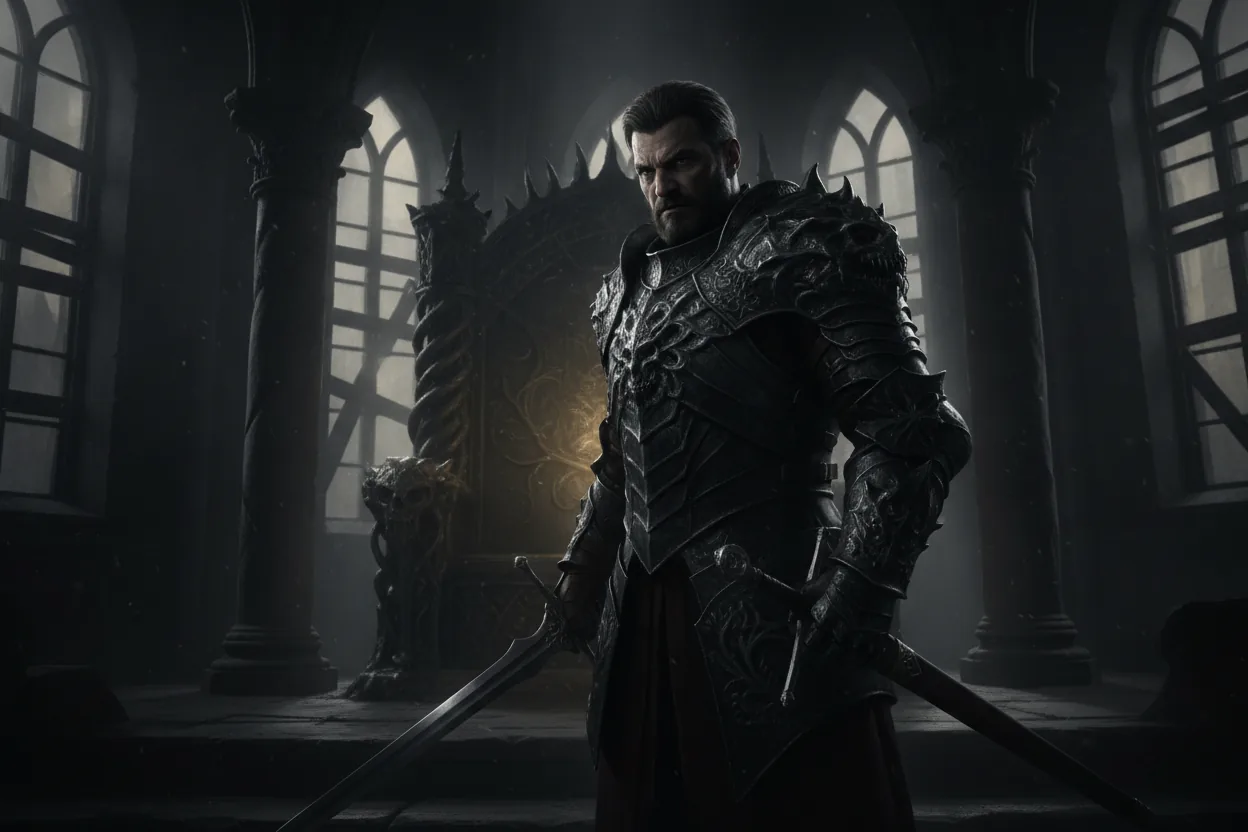
Okay. This is where I lose all pretense of objectivity. I don’t want a good man. I want a terrible one who becomes gentle for exactly one person and stays terrible for everyone else. I want the love interest who has blood on his hands and shadows at his command and a reputation that makes entire kingdoms flinch. And I want the moment when he looks at her and every sharp edge goes quiet.
The Fantasy of Being the Exception
The morally gray love interest isn’t new, but the way romantasy readers talk about this archetype in 2026 has shifted. It’s not about liking bad boys. It’s about the specific fantasy of being the exception. The person who gets through. The one who sees the monster and stays, not because she’s naive, but because she sees something no one else bothered to look for. That’s a powerful emotional hit, and it’s one that doesn’t need defending.
The Books That Stay Villains and Get Loved Anyway
Scarlett St. Clair’s [*King of Battle and Blood*](https://bookshop.org/p/books/king-of-battle-and-blood-scarlett-st-clair/17288428) delivers a version of this that’s unapologetically dark. The love interest is a vampire king. He is not pretending to be good. The heroine walks into his world knowing exactly what he is, and the tension comes from watching her decide what she’s willing to accept. That’s a fundamentally different emotional engine than a misunderstood hero. This is a villain who stays a villain and is loved anyway.
Kerri Maniscalco’s [*Kingdom of the Wicked*](https://bookshop.org/p/books/kingdom-of-the-wicked-kerri-maniscalco/14819138) plays in this same space with Wrath, a demon prince whose morality is nonexistent by human standards and whose possessiveness is framed not as a red flag but as a feature. “Touch her and die” isn’t a warning in these books. It’s a love language. And the readers who respond to it aren’t confused about what they want. They’re extremely clear.
Adelaide Forrest’s [*Bewitched*](https://bookshop.org/p/books/bewitched-adelaide-forrest/17790135) pushes the “violently soft” villain beat even further — a love interest whose darkness is structural, woven into what he is rather than what he’s done, and whose tenderness toward the heroine reads like a crack in a fortress wall. And for the mythology angle, Scarlett St. Clair’s [*A Touch of Darkness*](https://bookshop.org/p/books/a-touch-of-darkness-scarlett-st-clair/15187750) reimagines Hades not as a kidnapper but as the god who waits, who wants, who earns Persephone’s choice rather than demanding it. The villain redemption fantasy isn’t about making him safe. It’s about making his danger irrelevant in the face of how deliberately, devastatingly gentle he becomes for one person.
Shadow-Daddy Dynamics and Why They Hit Like Fae Lord Heroin
Let’s talk about shadow-daddy dynamics specifically because this archetype has evolved into something that deserves its own category on every recommendation map. The shadow-daddy is not just a morally gray love interest. He’s older. He’s dangerous. He’s protective in a way that borders on feral. He has power, usually shadow or death-adjacent, and he wields it with a precision that suggests centuries of practice. He calls the heroine something possessive. *Little one. My mate. Princess.* He says it like it costs him everything and he’d pay it again.
Rhysand from Sarah J. Maas’s [*A Court of Thorns and Roses*](https://bookshop.org/p/books/a-court-of-thorns-and-roses-sarah-j-maas/8014766) series is the obvious anchor point, and I’m not going to pretend he isn’t, because he is the reason half of BookTok has a Pinterest board titled “My Toxic Fae King.” But the archetype has proliferated. The Darkling from Leigh Bardugo’s [*Shadow and Bone*](https://bookshop.org/p/books/shadow-and-bone-leigh-bardugo/7476498) walked so every shadow-daddy could run. Cardan from Holly Black’s [*The Cruel Prince*](https://bookshop.org/p/books/the-cruel-prince-holly-black/6692952) added cruelty and vulnerability in equal measure. And newer entries like the love interests in Danielle L. Jensen’s [*The Bridge Kingdom*](https://bookshop.org/p/books/the-bridge-kingdom-danielle-l-jensen/11432749) series prove that this archetype works across subgenre lines.
The Contrast That Makes It Hit
What makes the shadow-daddy work as a tension engine is the contrast. He is terrifying to everyone except her. He has committed acts of violence that should be disqualifying. And yet. And yet. When she’s hurt, his entire world narrows to a single point. When she’s threatened, the shadows respond before he does. The softness isn’t earned through apology. It’s earned through action. Through the consistent, repeated choice to be something different for this one person.
And readers aren’t just passively consuming this. They’re debating it. They’re in TikTok comment sections arguing about whether Rhysand’s behavior in *A Court of Silver Flames* is canon-compatible with his established characterization. They’re making tier lists of shadow-daddies ranked by emotional damage potential. They’re writing essays about why the Darkling’s villainy makes him a better love interest than Mal could ever be. This is not casual reading. This is identity-level engagement.
The Recommendation Map You Need Right Now
So here’s how I’d build the recommendation path if you came to me right now and said “I need something very specific.”
If you want yearning that makes your chest physically hurt, start with enemies-to-lovers and stack forced proximity on top of it. [*The Cruel Prince*](https://bookshop.org/p/books/the-cruel-prince-holly-black/6692952) into *The Wicked King* into *The Queen of Nothing* is the cleanest delivery system for this combination. The hatred is real. The proximity is inescapable. The yearning compounds book over book until the payoff rewrites your understanding of what enemies-to-lovers can do.
If you want the slow ache of watching two people fall in love inside a structure that was never supposed to contain real feeling, fake marriage is your lane. [*A Deal with the Elf King*](https://bookshop.org/p/books/a-deal-with-the-elf-king-elise-kova/16229498) is where I’d start, then move into Katee Robert’s [Wicked Villains series](https://bookshop.org/p/books/desperate-measures-katee-robert/12589710) for a darker, spicier version of the same engine. The performance-to-reality pipeline in these books is devastating.
If you want danger and softness in the same breath, if you want to feel protected and threatened simultaneously, go straight to the shadow-daddy shelf. Start with [*A Court of Mist and Fury*](https://bookshop.org/p/books/a-court-of-mist-and-fury-sarah-j-maas/8014767) if you haven’t. If you have, and you’re looking for the next hit, try Laura Thalassa’s [*The Bargainer*](https://bookshop.org/p/books/rhapsodic-laura-thalassa/11375036) series, which gives you a fae male with shadow powers and a debt-based dynamic that turns every interaction into a negotiation loaded with subtext.
And if you want villain redemption — the real kind, where the love interest doesn’t get absolved but gets chosen anyway — Scarlett St. Clair’s [*King of Battle and Blood*](https://bookshop.org/p/books/king-of-battle-and-blood-scarlett-st-clair/17288428) and Kerri Maniscalco’s [*Kingdom of the Wicked*](https://bookshop.org/p/books/kingdom-of-the-wicked-kerri-maniscalco/14819138) are your starting points. These are books where the love interest’s darkness isn’t a phase. It’s a feature. And the heroine’s decision to stay isn’t weakness. It’s the most powerful choice in the story.
Why Reading by Feeling Instead of Plot Changes Everything
Here’s what’s happening when we organize our reading by emotional dynamic instead of by premise or plot. We’re not being lazy. We’re being honest. We know what we want. We know the exact emotional frequency we’re trying to tune into. And these labels have become the fastest, most accurate way to communicate that frequency to other readers, to algorithms, to ourselves.
When someone says “I need an enemies-to-lovers with a morally gray MMC and forced proximity,” they’re not describing a plot. They’re describing a feeling. They’re saying: I want to be angry and attracted at the same time. I want the love interest to be dangerous. I want them to be stuck together. I want the tension to build until it breaks. That’s not a genre preference. That’s an emotional prescription. And romantasy, more than any other category on the shelf right now, is built to fill it.
The best romantasy writers understand that the setup isn’t the story. The setup is the delivery mechanism for the emotion. Enemies-to-lovers delivers the specific high of watching hatred transform into need. Fake marriage delivers the ache of performance becoming truth. Forced proximity delivers the suffocation of wanting someone you can’t escape. Morally gray love interests deliver the fantasy of being chosen by someone who chooses nothing else. And shadow-daddy dynamics deliver the impossible combination of danger and safety, of being the one person a monster would never hurt.
That’s the map. That’s the system. And if you’re reading this and your chest is already tight with recognition because you know exactly which dynamic is calling your name tonight, then you don’t need me to tell you what to read next. You already know. You’ve always known. The feeling is the compass. The book is just where it points.