
Your Enemies-to-Lovers Obsession Evolved — Here’s How
The moment that broke me wasn’t the kiss. It was the knife.
I’m going to describe a scene from a book, and I need to be upfront: this is a composite. It’s built from real reading experiences across multiple fae MMF romantasy titles — not a single scene I can point you to with a page number. I’m telling you this because we’re a recommendation site, and I’d rather be honest about a constructed example than let you tear apart your TBR trying to find it. The specific books that got me here? I’ll name them when we get to the MMF section.
Two fae males who’d spent three hundred pages trying to destroy each other, and the human woman caught between them who wasn’t a prize but a provocation. The living proof that neither of them could hold his territory without bending. When she pressed the blade to the throat of the one who’d sworn to kill her, and the other one caught her wrist — not to stop her but to angle it better — I physically closed the book and put it on the floor. Because that’s what a trope twist does. It takes the enemies-to-lovers beat you’ve felt a hundred times and rearranges the power so violently that your body responds before your brain can categorize it.
That’s the thing about trope twists in romantasy right now. They aren’t novelty for novelty’s sake. They’re the reason your nervous system still fires when you read a dynamic you’ve technically already memorized.
Why Trope Purity Stopped Being Enough
Be honest. You’ve read enemies-to-lovers. You’ve read it in high fantasy courts, in modern dark romance penthouses, in paranormal pack dynamics, in small-town rivals who share a driveway. You know the arc. The hatred that’s actually obsession. The moment the mask cracks. The grovel. The surrender. You know the emotional beats so well you could hum them.
And that’s exactly the problem.
Trope purity — the version where the trope runs exactly as expected with no deviation in setting, identity, or power structure — gives you comfort. It’s a warm bath. It’s your reread book. But it stopped making your heart rate spike somewhere around the fifteenth variation, and you know it. You started searching for something that felt like the dynamic but also felt like a threat. Not a threat to the characters. A threat to *you*. To your certainty about what you wanted.
The data backs this up. Tropesmith tracked 141 demand mentions for plot twists in romantasy over 28 weeks — that’s number 11 out of 56 tropes. Not niche. Structural. Readers aren’t abandoning tropes. They’re demanding that tropes come with teeth.
Romantasy got big enough that trope alone stopped being the hook — you need the world to bite too. The big four in dark romance — mafia, stalker, forced marriage, morally gray villain protagonist — are still dominant. They haven’t gone anywhere. But the releases actually breaking through right now are the ones adding a modifier that changes the gravitational pull. Sapphic mafia. Sports-world stalker. Fae enemies-to-lovers MMF. The modifier isn’t decoration. It’s the entire reason the book feels alive instead of algorithmic.
The Hybrid Spin Rewrites the Power Dynamic
Here’s what a trope twist actually does on a mechanical level, because I think we talk about this stuff in vibes when it deserves precision.
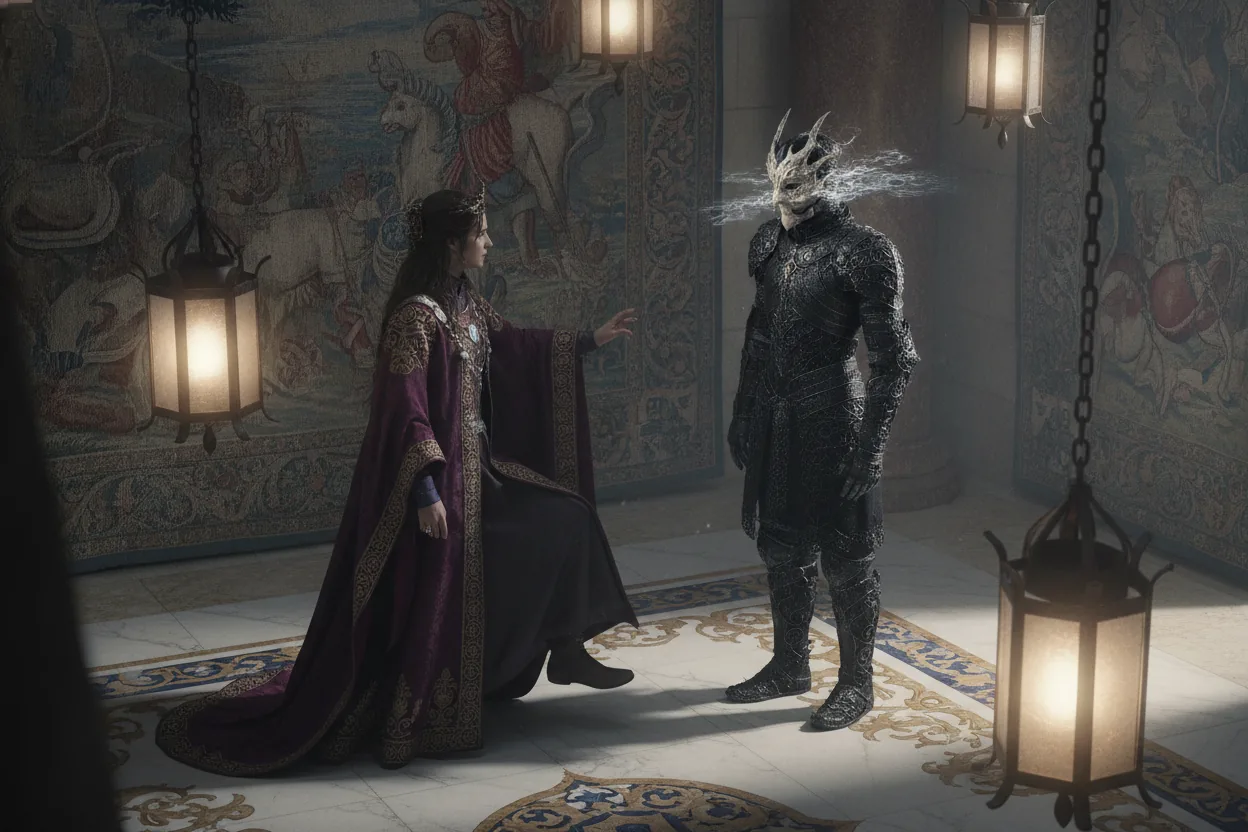
A pure enemies-to-lovers MF in a fae court has a legible power structure. He’s the high lord or the commander or the heir. She’s the captive or the rival court’s emissary or the human who stumbled through a rift. The enmity runs along one axis: his world versus hers. The tension resolves when she proves herself within his system or dismantles it. One axis. One negotiation. Satisfying, but singular.
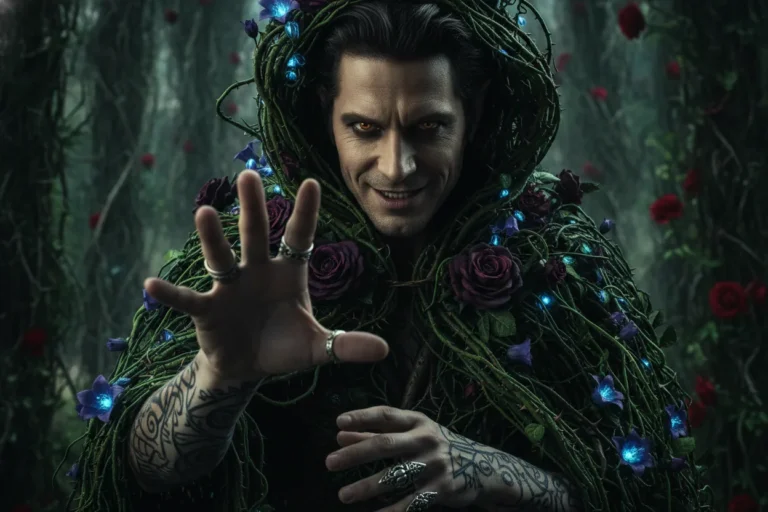
Now make it MMF. Two fae males on opposite sides of a blood feud, and a woman who belongs to neither court but holds something both of them need. The enmity doesn’t run along one axis anymore. It runs along three. He hates him. He wants her. She despises both of them but can’t stop her body from responding to the one who pinned her against the wall in chapter four and the one who healed her wound in chapter nine with hands that shook.
The tension doesn’t resolve along a single negotiation. It requires three separate surrenders, three separate grovels, three separate moments where someone chooses vulnerability over dominance. Every scene has to manage three electrical currents instead of one.
That’s not just spicier (and to be clear — the books doing this well tend to run high heat, often 4-5 🌶️, so calibrate your expectations accordingly). It’s structurally more dangerous. And danger is the commodity the market is actually trading in right now.
The fae enemies-to-lovers MMF moment I keep coming back to — the one that lives in my chest rent-free — comes from books like K.M. Shea’s fae court dynamics pushed into darker territory, or the kind of multi-axis tension you find in C.N. Crawford’s *Demons of Fire and Night* series where the power shifts between characters never settle into a single comfortable groove. Laura Thalassa’s *The Bargainer* series plays with adjacent energy in its power negotiations, even if it stays MF. And if you want the full three-axis MMF heat with fae worldbuilding, look at newer indie releases like Vera Valentine’s court-intrigue fantasies where the triangle isn’t a love triangle — it’s a power triangle that happens to combust.
The scene I keep replaying: both males realize they don’t just want her. They want each other’s destruction to stop because she’s made them see each other differently. “I would have gutted you in your sleep a month ago,” one says, and the other responds, not with a threat, but with: “You still could. That’s why I let you stay.”
That line. That’s the trope twist in a single breath. The enmity isn’t gone. It’s been alchemized into a different kind of intimacy, one where trust and threat coexist in the same sentence. Pure enemies-to-lovers resolves the tension. The twist lets the tension live inside the resolution. It never fully goes away. And that’s why you can’t stop thinking about it.
Sapphic Mafia and the Identity Modifier

Let’s talk about sapphic mafia specifically because it’s one of the clearest examples of how an identity modifier changes everything about a trope you thought you’d exhausted.
Mafia romance has a well-worn template. Dangerous man. Woman who’s either pulled into his world against her will or born into a rival family. The appeal is the juxtaposition of brutality and tenderness, the idea that the most dangerous person in the room is also the one who’d burn the world down to keep you safe. It works. It’s worked for decades. It’ll keep working.
But sapphic mafia doesn’t just swap the gender. It rewrites the entire power mythology that mafia romance runs on. The patriarchal structure that makes traditional mafia romance legible — the don, the heir, the enforcer, the bride traded for alliance — is the engine of the trope. When you remove the default gender dynamic, you don’t just get “the same story but with women.” You get a story where the power has to be sourced differently. The danger has to be justified differently. The tenderness hits differently because it’s not contrasting with expected masculine stoicism; it’s contrasting with a different kind of armor, one the reader might recognize from her own life in ways she didn’t anticipate.
You can feel this working in books like R.S. Grey’s darker-edged sapphic tension, but where it really detonates is in titles like Karina Halle’s *A Sapphire Darkness* or the indie sapphic dark romance space where authors like Kora Lowe and Margaux Fox are building mafia worlds from scratch without borrowing the patriarchal scaffolding. Carmen Santos’s *Queen of the Underworld* forces into the open the specific tension of a woman who built a criminal empire in a structure that never imagined her, falling for someone who could dismantle everything she constructed — not through betrayal, but through making her want something softer than survival.
The woman who runs the family isn’t performing a role designed for a man. She built the role from scratch in a world that didn’t want her to have it. And the woman she’s drawn to isn’t softening her. She’s sharpening her into something more precise. The chemistry isn’t opposites attract. It’s two people who’ve both had to fight to exist in spaces that weren’t designed for them, recognizing each other’s scars and choosing to be dangerous together instead of safe apart.
That’s a different emotional payload than traditional mafia romance delivers. Not better. Not worse. Different in a way that makes your brain light up because it hasn’t mapped this territory yet.
Sports-World Stalker and Setting as Provocation

The sports-world stalker hybrid does something equally disorienting, and I want to talk about why it works because on the surface it sounds like it shouldn’t.
Stalker romance operates on surveillance and obsession. The appeal is being so thoroughly seen that there’s nowhere to hide, and discovering that being fully known by someone dangerous is actually what you craved. The tension comes from the violation of boundaries that the protagonist secretly wanted violated. It’s a consent fantasy wrapped in the aesthetics of threat, and when it’s done well, it’s devastating.
Sports romance operates on discipline, physicality, competition, public performance. The appeal is watching someone who’s built their entire identity around control lose it for one person. The grumpy hockey captain who can’t stop staring at the sunshine equipment manager. The MMA fighter whose hands are weapons everywhere except when they’re touching her.
Fuse them. A stalker who isn’t lurking in shadows but sitting in the stands every game, tracking every movement on the ice or the field with the same obsessive precision he brings to learning her schedule, her coffee order, her shower playlist. The surveillance isn’t hidden. It’s public. He’s there every game. Everyone can see him watching her. And the sports setting means her body is already on display, already performing, already being watched by thousands of people. But his gaze is different. She can feel it. It’s the one gaze in the arena that isn’t watching her play. It’s watching her *breathe*.
You can see this machinery working in Hannah Grace’s *Icebreaker* and its orbit of hockey romance tension, but the stalker fusion specifically detonates in books like Brynne Weaver’s *Butcher & Blackbird* (which grafts obsessive pursuit onto a competitive structure) and in the figure-skating stalker romances emerging from indie authors like Kia Hollis, where the public performance element makes the surveillance feel inescapable in a way that bedroom-window stalker romance can’t replicate. Ana Huang’s *Twisted* series plays in adjacent territory — the obsessive male lead whose watching is woven into a world of public visibility and status.
The setting doesn’t just change the scenery. It changes the mechanism of the obsession. Public stalking hits differently than private stalking. Being watched by someone dangerous when you’re already performing for a crowd creates a specific kind of tension that pure stalker romance in a private setting can’t replicate. You’re not hiding from him. You can’t. Your life is a spectacle. And he’s turned himself into part of your audience in a way that makes the boundary between fan and threat dissolve.
That dissolution is the twist. And it’s why readers who thought they’d maxed out on stalker romance are suddenly feral for the sports-world version.
BookTok’s Trope Language Evolved Without Announcing It
Here’s something I don’t think we talk about enough. BookTok’s trope economy has quietly shifted from pure trope labels to compound trope labels, and the platform didn’t issue a press release about it. It just happened.
Two years ago, you could recommend a book by saying “enemies-to-lovers, fae, spicy” and that was enough information to make someone add it to their TBR. Now? That description applies to hundreds of books. The label isn’t a recommendation anymore. It’s a category so broad it’s almost meaningless for discovery purposes.
So the language evolved. Instead of single tropes, BookTok now runs on trope combinations that function as micro-genres. Romantasy dragons. Hockey grumpy-sunshine. Dark mafia. Professor romance. Each of those is a compound — a trope fused with a setting or character type that narrows the field enough to be useful again.
And the trope twists we’re talking about — sapphic mafia, sports-world stalker, fae enemies-to-lovers MMF — are the next evolution of that compound language. They’re not just trope-plus-setting. They’re trope-plus-identity-shift or trope-plus-power-restructuring. The modifier doesn’t just narrow the category. It changes the emotional experience of the category.
This is why your Pinterest boards look the way they do now. You’re not pinning “enemies-to-lovers aesthetic” anymore. You’re pinning “fae court MMF enemies-to-lovers with blood oath tension and morally gray surrender.” Because the specificity is the point. The specificity is where the feeling lives.
The Three Trope Hybrids That Hit Closest to Fae MMF Enemies-to-Lovers
Since we’re deep in this, let me name the three hybrid tropes that scratch the closest itch to fae enemies-to-lovers MMF, because if that’s your fixation, these are your adjacent obsessions.
First: rivals-to-lovers with a forced alliance and a third-act betrayal that turns out to be a sacrifice. This is the trope’s more politically complex cousin. The enmity isn’t personal. It’s structural. They’re on opposite sides of a war or a competition or a power struggle, and the forced alliance makes them cooperate before they’re ready to stop hating each other. The third-act betrayal that’s actually a sacrifice is the twist that recontextualizes every sharp word they exchanged as a form of protection the reader didn’t see coming. It’s the dynamic with an unreliable narrator built into the relationship itself.
Second: dark court arranged marriage MMF where the bride is the one with the real power. This takes forced proximity and marriage of convenience and wraps them in a fae court power structure where the two males think they’re acquiring an alliance through her, but she’s the one who engineered the match to gain access to both courts. The “twist” is that the captive is the architect. The enemies aren’t her enemies. They’re her pieces on a board they don’t know she’s playing. And the moment they realize it, the attraction doesn’t just intensify. It fundamentally changes shape because now they’re choosing to stay even though she outmaneuvered them, and that choice is where the real vulnerability lives.
Third: morally gray found family in a heist setting where the romantic tension is between the team leader and two members who hate each other. This one moves the fae court energy into a tighter, more claustrophobic setting. The heist creates forced proximity and high stakes. The team leader is the axis around which the two rivals orbit, and the heist’s success depends on all three of them trusting each other enough to be vulnerable in the field. The twist is that the heist itself becomes a metaphor for the relationship: you can’t pull it off without letting someone see your weak spots, and letting them see your weak spots might get you killed or might get you loved in a way you didn’t think you deserved.
All three of these share the same core architecture as fae MMF enemies-to-lovers: multiple axes of tension, power dynamics that shift throughout the narrative, and a resolution that doesn’t erase the danger but transforms it into something consensual and chosen.
Why the Twist Is the New Purity
I want to end on something that feels important to name because I think it explains not just what’s happening in the market but what’s happening in us as readers.
Trope purity gave us a promise: you will feel the thing you came here to feel, exactly the way you felt it last time. And for a long time, that promise was enough. Rereading was the purest form of it. You already knew what happened. You went back for the feeling.
But something shifted. Maybe it was the sheer volume of romantasy being published. Maybe it was the way BookTok accelerated the consumption cycle until you could burn through a trope’s emotional territory in a single weekend binge. Maybe it was just growth. You changed as a reader. Your nervous system adapted to the stimulus, the way it does with anything, and the pure form stopped producing the same neurological response.
The twist isn’t a rejection of the trope. It’s a renewal of it. It’s the thing that makes your body respond to enemies-to-lovers like it’s the first time, because in this specific configuration — with this identity modifier or this power restructuring or this setting that changes the mechanism of desire — it *is* the first time. Your brain hasn’t mapped this version yet. Your heart doesn’t know how it ends. And that uncertainty, that delicious not-knowing wrapped in the comfort of a recognizable emotional shape, is the exact cocktail that makes you stay up until 3 a.m. with your phone brightness on low and your pulse doing something unreasonable.
Trope-plus-worldbuilding-plus-identity-twist is the strongest sell in romantasy right now, because it gives you the familiarity your heart needs and the danger your brain craves and the specificity your Pinterest board demands.
You don’t want enemies-to-lovers. You want enemies-to-lovers where the enmity is threaded through a specific power structure that makes the surrender cost something real, where the identities of the characters change the shape of what surrender even means, where the setting pressurizes the desire until it either breaks or becomes something new.
You want the twist. You’ve always wanted the twist. The market just finally caught up with you.