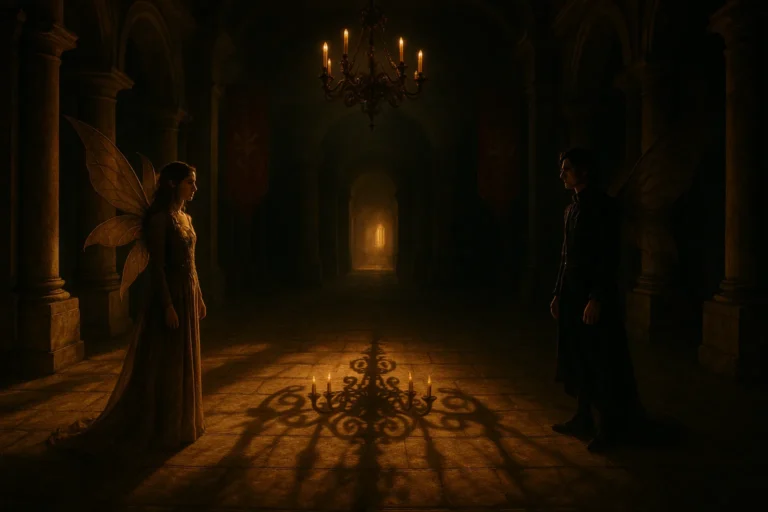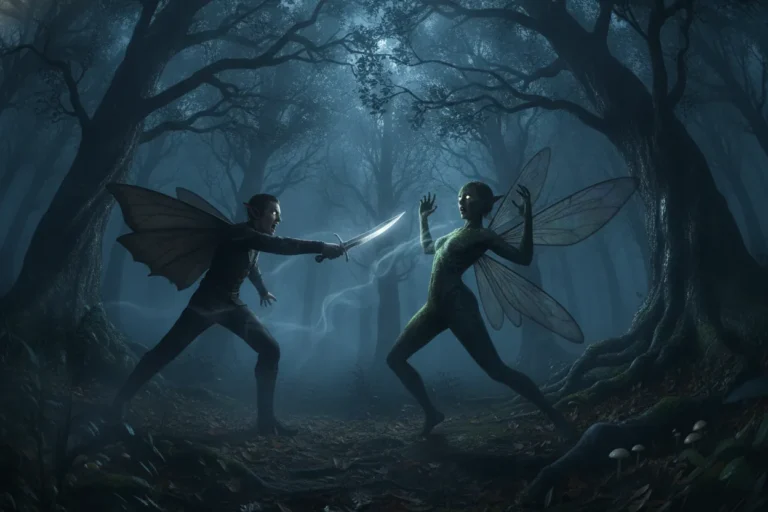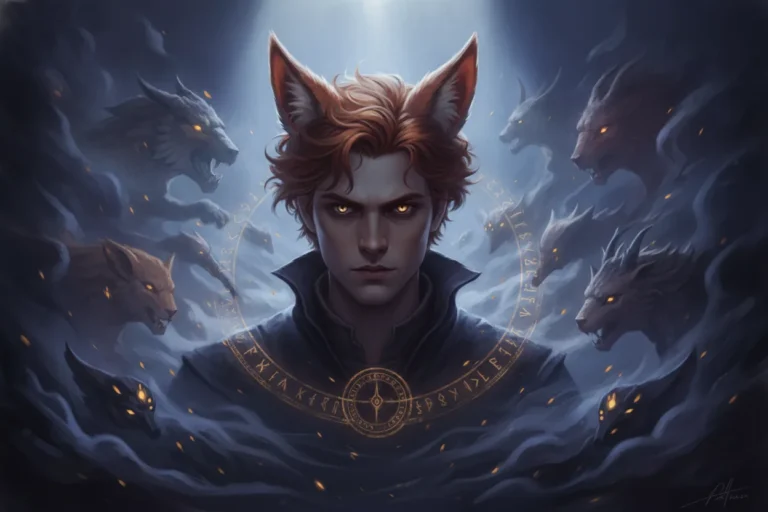

The MMF Fae Enemies-to-Lovers Scene That Broke Me
*Imagine this line: “I don’t want you. I want to destroy you. But if I have to watch you fall apart first, I’ll use my hands, my mouth, and every rune carved into my cursed skin to do it.”*
That kind of line. The one where the fae lord who has been swearing blood oaths to end your entire bloodline suddenly pins you to a wall of living thorns and whispers something so devastatingly filthy that the air between you cracks with actual magic. I read that kind of line in a spicy MMF fantasy romance last winter and I have not recovered. I will not recover. I have built three separate Pinterest boards around the mood of that single scene, and I regret nothing.
The Spice Isn’t Decoration — It’s the Whole World

If you’re reading this, you already know what spicy fantasy romance means to you. You don’t need it explained. But here’s the thing nobody talks about enough: the spice in romantasy is doing something that goes way beyond getting your heart rate up. It’s building worlds. It’s detonating emotional walls between characters who were never supposed to want each other. And it’s functioning as its own language — one that readers like us have turned into identity, into aesthetic, into a whole way of signaling who we are and what we crave in fiction and beyond it.
There’s this idea floating around BookTok that spice is just a heat rating. Like you slap a pepper emoji on a book and call it a day. One pepper, closed door. Five peppers, you need to put your phone face down on a bus. And look — that shorthand is genuinely useful when you’re trying to figure out if a rec from your coworker is going to make you blush during your lunch break. But it misses the point of what romantasy spice actually does when it’s written well.
Readers across BookTok, Bookstagram, and romantasy forums have been making this argument for years now: the intimate scenes in romantasy function as miniature worldbuilding engines. Not separate from the fantasy. Not pausing the plot to deliver a sex scene like a commercial break. The erotic detail, the fantasy logic, the centering of female pleasure — they’re woven together into a single fabric. When a scene involves magic reacting to desire, when a mating bond flares during a moment of vulnerability, when a character’s fae abilities literally cannot function unless they surrender to what they feel, that’s not just spice. That’s the magic system expressing itself through the body.
Think about the MMF version of this and it gets even richer. You’ve got three characters whose powers might conflict, whose political allegiances put them on opposite sides of a war, whose very biology as fae or cursed or bound-to-a-throne creatures makes intimacy a literal act of worldbuilding. One character’s touch ignites a ward. Another’s surrender breaks a seal. The third holds the balance, and the scene where all three finally collide isn’t just hot. It’s a plot event. It’s a magic event. It’s the moment the world of the book shifts on its axis because these three bodies and hearts and powers finally stopped fighting each other.
That’s why “how spicy is this?” is still a live debate in our community. Because the answer depends on whether you’re measuring graphic detail, emotional devastation, or the degree to which the intimate scene is load-bearing for the entire fantasy narrative. Some of the most devastating spice I’ve ever read was a single paragraph. Short. Almost restrained in its language. But it carried so much character history, so much longing that had been building for three hundred pages, that it hit harder than any five-page explicit scene ever could.
The Enemies-to-Lovers Fae Trope in MMF Hits on a Different Frequency
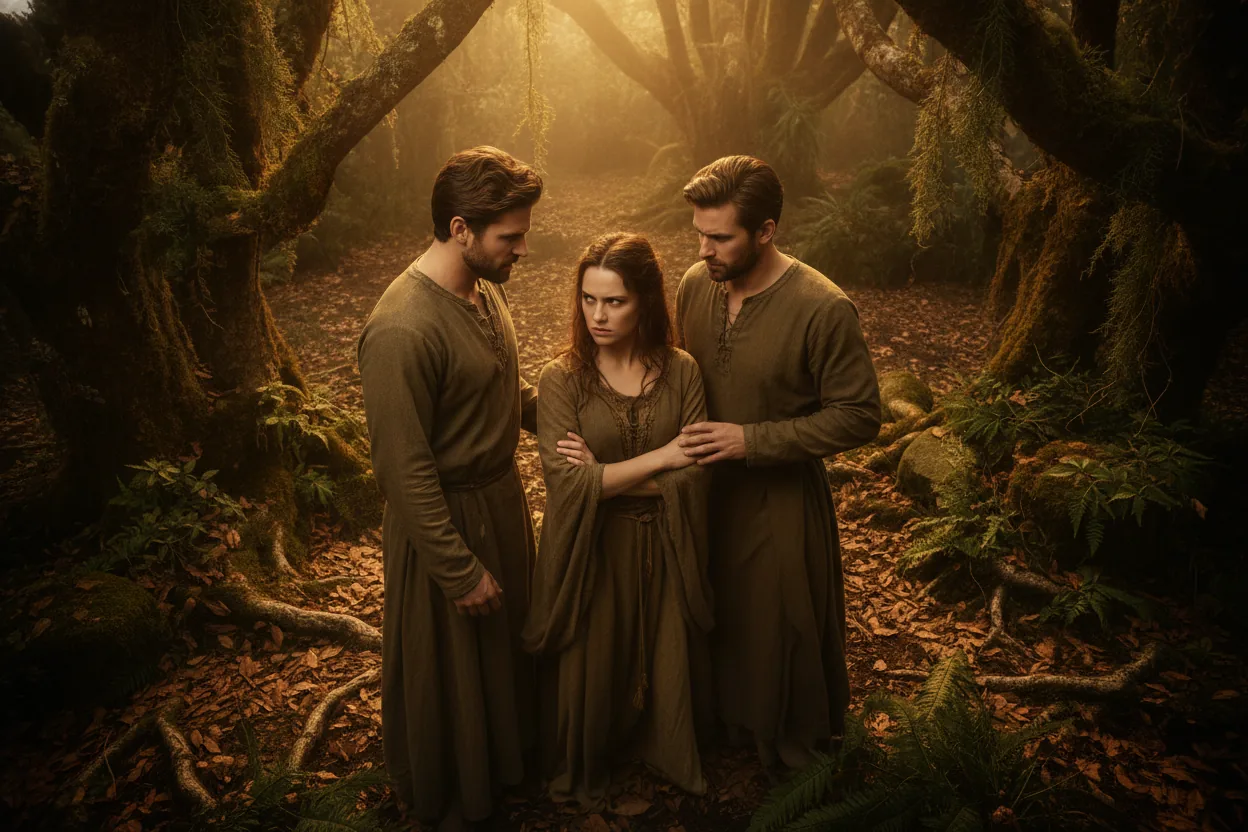
Let’s name the trope. Enemies to lovers. You know it. You live in it. You have opinions about it that you will defend in a TikTok comment section at 1 AM on a Tuesday. But the MMF fae version of this trope operates on a frequency that the standard two-person dynamic simply cannot reach.
Here’s why. In a traditional enemies-to-lovers pairing, you’ve got one axis of tension. Character A hates Character B. Character B hates Character A. They collide. Sparks. Fury. That moment where hatred tips into something unbearable and someone’s back hits a wall.
In MMF enemies to lovers, you’ve got a triangle of tension, and every side of that triangle can carry a different charge. Maybe two of the three are the primary enemies, bound by a blood feud that goes back centuries, and the third is the reluctant bridge between them — someone who cares for both and is being torn apart by it. Maybe all three hate each other for different reasons. Maybe two of them have a history of almost-tenderness that the third doesn’t know about, and the revelation of that secret is what finally cracks the dynamic open.
The fae setting amplifies all of this because fae politics are built on deception, bargains, and courts that function through power games. Every touch between enemies in a fae MMF isn’t just personal. It’s political. It’s a concession. It’s a vulnerability that could be weaponized. And when the scene finally happens — when the three of them stop circling and start colliding — the stakes are so layered that every single moment carries weight.
*Picture this line: “You’re both my ruin and my reign. I’ll kneel for one of you and conquer the other, and neither of you gets to choose which.”*
That line works because it collapses the power dynamic entirely. It refuses to resolve the tension into a neat hierarchy. It holds the contradiction. And in MMF, contradiction is the engine. You don’t get a clean winner and loser. You get three people negotiating desire, pride, and surrender in real time, and the scene becomes this living, breathing negotiation that mirrors the political world around them.
Three tropes that hit in similar territory: forced proximity with a shared-bed twist (where all three have to sleep in the same enchanted space and the wards won’t hold unless they’re touching), betrayal bonding (where one character’s act of treachery against the group becomes the catalyst for the most emotionally raw intimacy), and there-was-only-one-cure (where a magical ailment requires the combined energy of multiple bonded partners, turning a survival scene into something achingly tender and desperately physical at the same time).
If you’re hunting for more trope combos like these, our [guide to matching your exact trope craving to a romantasy rec](https://www.romantasyrefuge.com) is a good place to start.
Your Mood Board Is a Map of Your Desire

Here’s where we leave the page and talk about what’s happening around the page. Because if you’re in this community, you know that reading spicy romantasy is only half the experience. The other half is the curation. The boards. The aesthetics. The way you build a visual world around the feeling a book gave you and then share that world as a statement of identity.
Mood boards in the romantasy space are functioning as a shared language of belonging. They’re not just pretty collages. They’re signals. When you pin a dark forest with silver mist, a close-up of hands gripping a throat (gently, tenderly, with rings on every finger), a chalice of something that looks like wine but is probably enchanted blood, and a quote card that says “he fell first but she fell harder,” you are communicating something incredibly specific. You’re saying: this is my kind of romantasy. This is the emotional temperature I crave. This is the aesthetic that makes me feel seen.
And the spice is part of that aesthetic. Not separated out. Not quarantined into some NSFW corner. The mood board for a spicy fae enemies-to-lovers MMF isn’t going to look like the mood board for a cozy cottagecore slow burn, and that difference matters. The colors are darker. The textures are sharper. There’s more shadow, more contrast, more images that suggest tension and edge and the kind of beauty that has teeth.
This is how discovery works now for so many of us. We don’t search for books by typing a plot summary into a search bar. We scroll through mood boards and aesthetic posts until something resonates with the vibe we’re chasing. We find our next read because someone’s board made us feel the same thing a book made us feel, and we trust that feeling more than we trust a blurb. Writers and book curators who understand this are building boards around mood, setting, and character vibe, and that mirrors exactly how fandom readers search for books: by identity-coded aesthetic, not premise.
Why “How Spicy Is This?” Is the Wrong Question
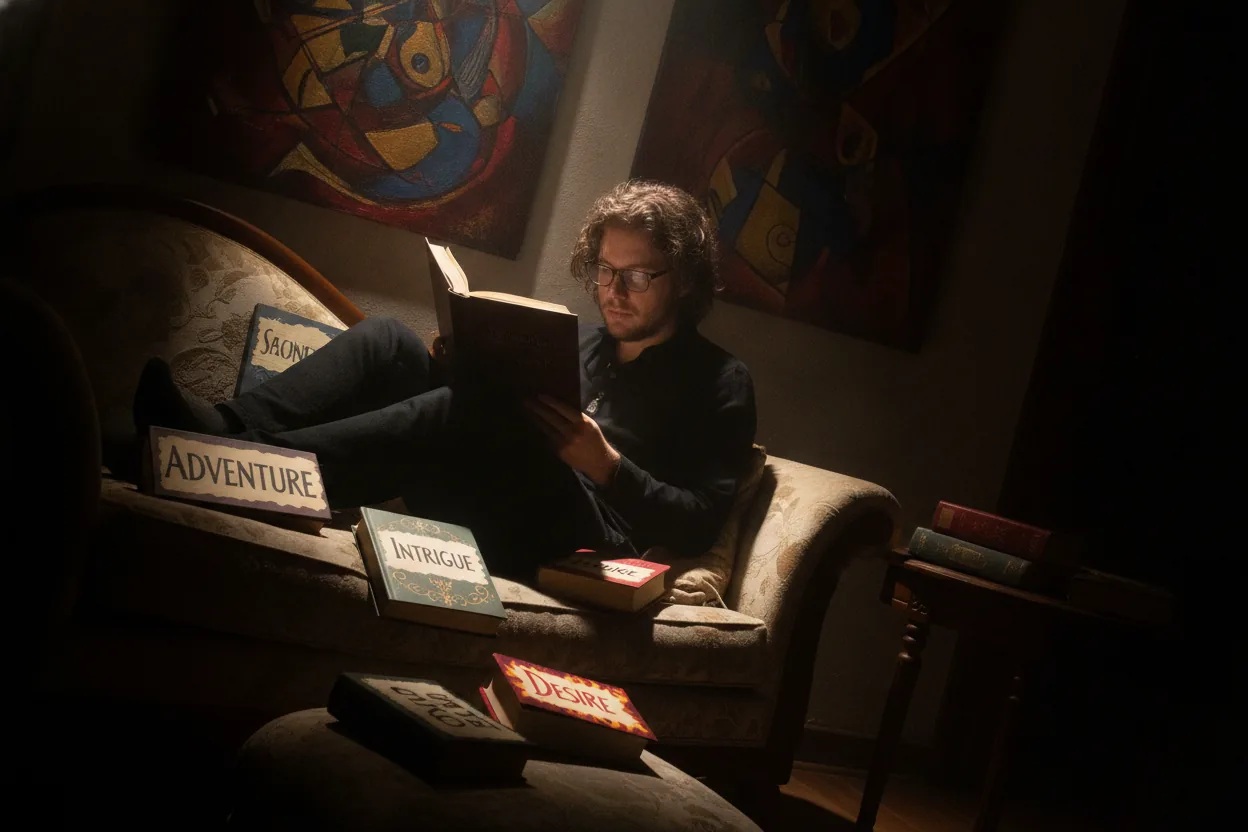
The most common question in romantasy spaces is still “but how spicy is it?” And it’s not a bad question. It’s practical. It helps you know what you’re walking into. But it’s the wrong question if you’re trying to understand why a scene hit you the way it did.
The better question is: what kind of spice? Because spice level as a single scale collapses at least three distinct dimensions into one number, and those dimensions are doing very different things for the reading experience.
Dimension one is explicitness. This is the graphic detail level. How anatomically specific does the scene get? How many body parts are named? How much choreography is on the page? This is what most pepper scales are measuring, and it’s the least interesting dimension on its own.
Dimension two is emotional intimacy. This is the vulnerability level. How much does the scene reveal about what the characters feel for each other? Is there tenderness? Is there fear? Is there a moment where someone says something so honest that it shatters the dynamic more effectively than any physical act could? Some of the spiciest scenes I’ve ever read are spicy because of this dimension, not the first one. A character whispering “I see you” during a moment of complete physical exposure can wreck you harder than the most explicit page in the genre.
Dimension three is tonal immersion. This is the fantasy-as-foreplay dimension. How much does the scene feel like it belongs to its world? Are the magic systems involved? Is the setting alive and responsive? Does the fae court politics seep into the bedroom dynamics? This is where romantasy spice distinguishes itself from contemporary romance spice. The scene doesn’t just happen between people. It happens between people who exist inside a fantasy ecosystem, and the ecosystem shows up.
Romantasy authors have been talking about this openly. Some intentionally write shorter, more emotionally concentrated scenes because they know that length doesn’t equal impact. A three-paragraph encounter where a fae lord presses his forehead against his enemy’s temple and says nothing while his magic spirals visibly out of control can carry more heat, by any definition that matters, than a chapter-length explicit sequence with no emotional stakes.
The MMF Dynamic Makes Intimacy a Political Act
In MMF fae romantasy specifically, the intimate scene is almost always doing political work. It has to be. Because when three characters are involved, the power dynamics in the bedroom are a direct mirror of the power dynamics in the court or the war camp or the enchanted prison or wherever these beautiful disastrous people keep finding themselves.
Who initiates? That’s a political statement. Who surrenders first? That’s a concession. Who holds back, watching, waiting, choosing the exact moment to join? That’s strategy. And the reader feels all of it because we’ve spent hundreds of pages watching these three negotiate the same dynamics in every other context. The war council arguments. The charged silences during diplomatic dinners. The moment one character saves another’s life and the saved one is furious about it because owing a debt to an enemy is worse than dying in their court’s value system.
All of that context floods into the intimate scene. And in the MMF structure, you get a third point of view, a third body, a third set of desires and fears and political calculations, which means the scene has more information in it. More subtext. More angles. You’re not just tracking one power exchange. You’re tracking three simultaneous ones, and the way they interact creates something that feels genuinely complex in a way that mirrors how real desire actually works: messy, contradictory, shaped by context, impossible to reduce to a single heat number.
This is why the mood board for an MMF fae enemies-to-lovers book doesn’t look like any other mood board. The aesthetic has to hold contradiction. Dark and tender. Violent and gentle. Three figures who look like they could kill each other and are instead choosing, in this one impossible moment, not to.
Spice as Identity, Not Just Content
The deepest thing happening in our community right now is the way spice has become an identity marker rather than just a content descriptor. When someone says “I read spicy romantasy,” they’re not just telling you about their reading preferences. They’re telling you something about how they move through the world. They’re telling you they value female pleasure as a legitimate subject of art. They’re telling you they believe desire is worth examining in detail, not just gesturing toward. They’re telling you they see themselves in characters who want things fiercely and refuse to apologize for it.
And here’s what our community has been saying for years, loudly and without apology: these scenes matter. The centering of female pleasure in romantasy — the specificity of it, the refusal to fade to black, the insistence that women’s desire deserves the same detailed attention as a magic system or a battle sequence — that’s not incidental. It’s the whole point. These books are teaching readers a vocabulary for their own want. They’re normalizing the idea that women’s desire is specific, varied, worthy of attention, and capable of existing inside complex fantasy narratives without diminishing either the desire or the fantasy. You can call that “cliteracy” if you want a word for it. Our readers have been living it since long before anyone put it in an essay.
When you build a mood board around a spicy fae MMF enemies-to-lovers book, you’re participating in that work. You’re saying: this is what desire looks like to me. This is the visual language of what I find beautiful and devastating and worth returning to. And when other readers see your board and recognize it, that recognition is a form of community. It’s how we find each other. It’s how we know we’re not alone in wanting books that take desire as seriously as they take worldbuilding.
The readers who track their favorite fae lords on niche Pinterest boards, who re-read their comfort scenes during hard weeks, who join comment sections to debate whether a ship delivers on its tension-to-payoff ratio — those readers aren’t consuming content. They’re building a culture. And the heat isn’t just part of that culture. It’s the heartbeat of it.
So the next time someone asks you “but how spicy is it?” try this instead: tell them what the intimacy does. Tell them it builds the world. Tell them it breaks the enemies open. Tell them it functions like a third language between three people who were never supposed to want each other. Tell them your mood board says everything the pepper scale can’t.
And then send them the Pinterest link. They’ll understand.
*Already know your next MMF fae obsession? We want to hear about it. Drop your recs, your mood boards, and your unhinged takes in our community — and if you want picks delivered straight to your inbox, [join the Romantasy Refuge newsletter](https://www.romantasyrefuge.com).*