Three MMF Fae Court Series Where Love Breaks Thrones
Okay. The fae court romantasy trope that’s absolutely destroying me right now isn’t enemies-to-lovers. It’s not even fated mates. It’s the moment when two people who want each other realize that being together would literally collapse a political system. I’m talking worldbuilding that doesn’t just decorate the romance — it weaponizes it. Where a kiss isn’t subtext. It’s succession law. Where falling for someone from a rival bloodline doesn’t just upset your family. It rewrites the power map of an entire realm.
That’s the thing hitting harder than anything else in my reading life, and I need to talk about it like I need air.
I’ve been neck-deep in MMF fantasy romance series that use fae courts and magic factions as pressure systems for desire, and something clicked that I can’t unclick. The best romantasy worldbuilding doesn’t just give you a pretty throne room and some pointed ears. It builds institutions. Rules. Consequences. Love becomes a negotiation, and that negotiation is where the tension lives. Not in “will they or won’t they” but in “if they do, what breaks?”
And when that negotiation involves three people instead of two? The geometry changes everything. A couple navigating fae court politics can play two sides against each other. A triad — especially one where each person belongs to a different faction — can’t hide behind a binary. Every alliance reads as conspiracy. Every intimate moment is a summit meeting the courts didn’t authorize. The emotional calculus of who reaches for whom first, who pulls back to protect the other two, who sacrifices their standing so the triad survives — that’s what MMF brings to this subgenre that nothing else replicates.
When the Worldbuilding Makes Romance a Declaration of War
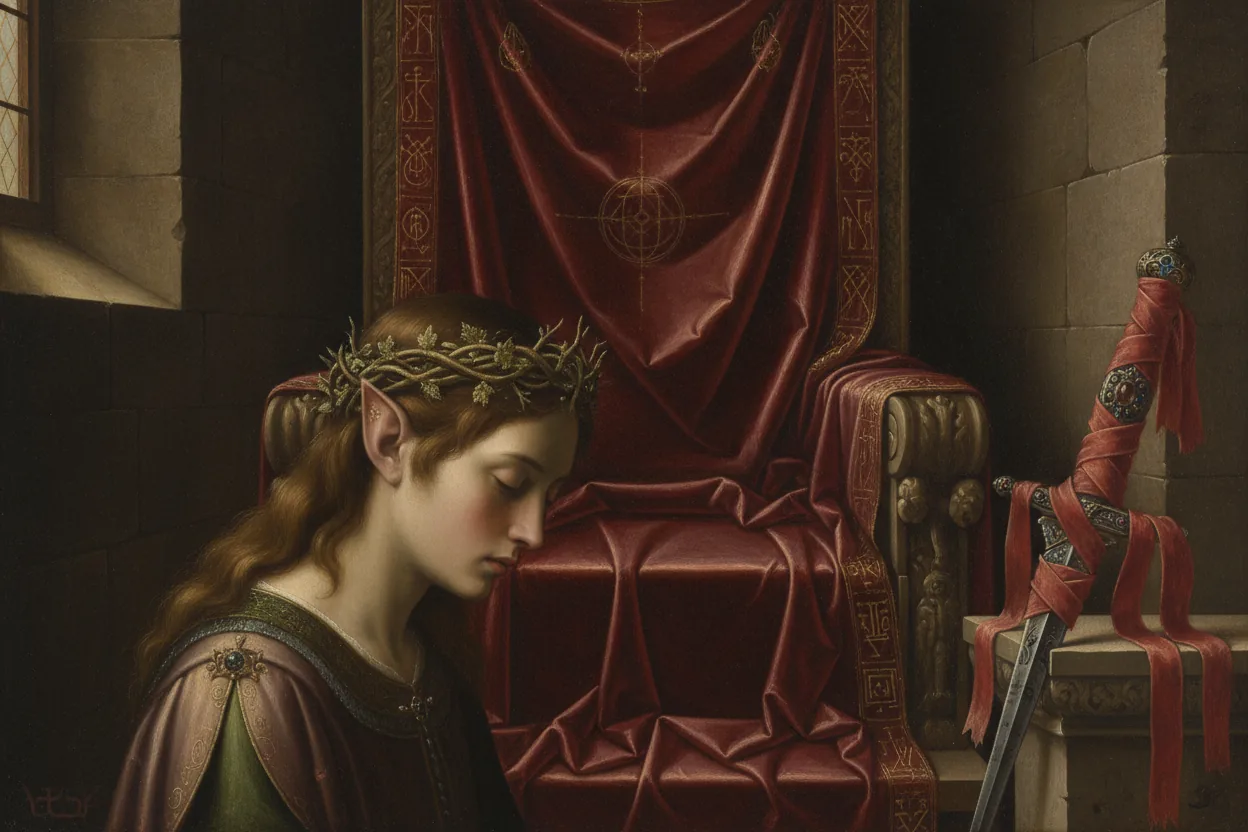
The first chapter that wrecked me opened on a naming ceremony. Not a meet-cute or a battle. A fae heir kneeling before a court and being bound, by blood and title, to a house that would dictate who they could marry, who they could touch, and whose power they could share. The tension wasn’t in the spectacle — it lived in the way the character’s jaw tightened. In the single sentence where they thought, “This is the last time my body belongs to me.”
That’s the hook. Not action. Not mystery. Institutional violence dressed as tradition. And it told me everything I needed to know about why the romance in this story was going to feel like defiance.
This is what fae court romantasy does when it’s operating at full power. It takes the aesthetic we all love — the seasonal courts, the Seelie and Unseelie divisions, the gorgeous gowns and ancient grudges — and it turns them into enforceable systems. Marriage isn’t romantic. It’s a treaty. A child isn’t a blessing. It’s a claim. Naming someone isn’t intimacy. It’s jurisdiction. And when the romance blooms inside that cage, every stolen glance carries the weight of treason.
I think about this constantly. The reason fae courts work better than, say, a generic fantasy kingdom for this kind of story is specificity. Courts have rules. They have hierarchies that aren’t just about who has the biggest army. They’re about lineage, about magical inheritance, about which bloodline carries the right to rule a particular season or territory. When you fall for someone from the wrong court, you’re not just breaking a social norm. You’re violating a constitutional framework.
Rival Bloodlines Turn Identity Into the Real Battlefield
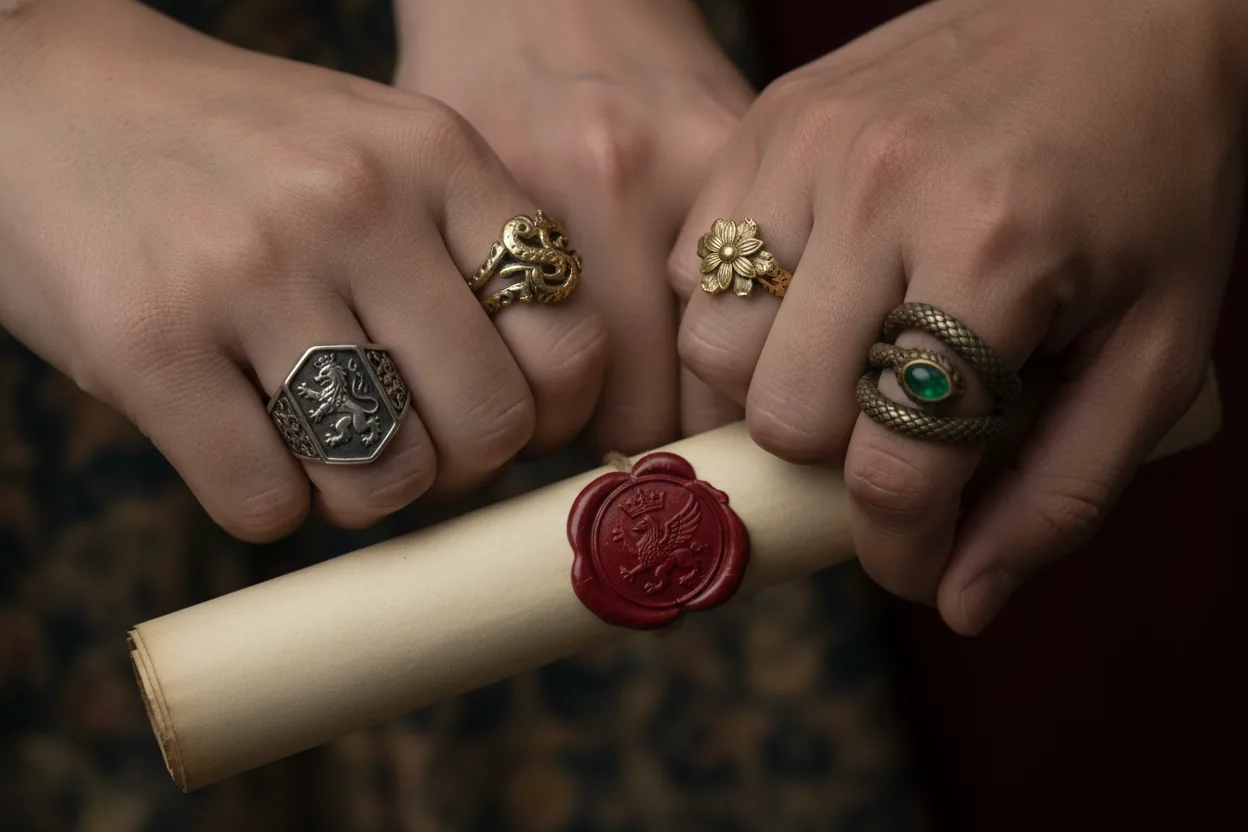
Here’s where the MMF romance build gets me in the chest every single time. Because when you have three characters navigating this political landscape together, the bloodline stakes multiply. You’re not just dealing with one forbidden attachment. You’re dealing with a web of competing claims, loyalties, and histories that make every new layer of intimacy feel like pulling a thread that could unravel everything.
Katee Robert’s *Dark Olympus* series cracked this open for me — not fae courts specifically, but the political architecture of desire that made me hungry for the subgenre. The series that fully broke my brain on fae court MMF, though, did this thing where two of the three love interests came from rival bloodlines. Not just “our families don’t get along” rival. I mean centuries-old, the-gift-running-through-our-veins-is-fundamentally-incompatible rival. One carried fire-aligned power tied to a summer court. The other carried shadow gifts bound to an underground faction that had been exiled three generations back. And the third? The third was the heir. The one whose bloodline was supposed to be pure. Uncorrupted. Unmarried to anyone outside the approved list.
The slow burn between them wasn’t about “do I like you.” It was about “if I love you, do I lose my name?” And in a fae system where your name IS your power, that’s not metaphorical. That’s material.
This is the “bloodline as burden” angle that keeps resurfacing in the books I can’t put down. The heir who discovers mixed heritage and suddenly doesn’t know if their claim to the throne is legitimate. The bastard child whose existence threatens a peace accord. The lover whose bloodline carries a curse that activates through physical intimacy. These aren’t just plot devices. They’re identity conflicts. They force characters to ask whether they are their family’s history or their own future, and every romantic choice becomes a referendum on that question.
I’ve seen readers on BookTok debate this for hours. Not “who should she end up with” but “does choosing him mean she accepts the system or destroys it?” That’s the level of political engagement these worldbuilding choices create. The romance isn’t separate from the politics. It IS politics.
The Fae Trauma Moment That Rewired My Whole Brain
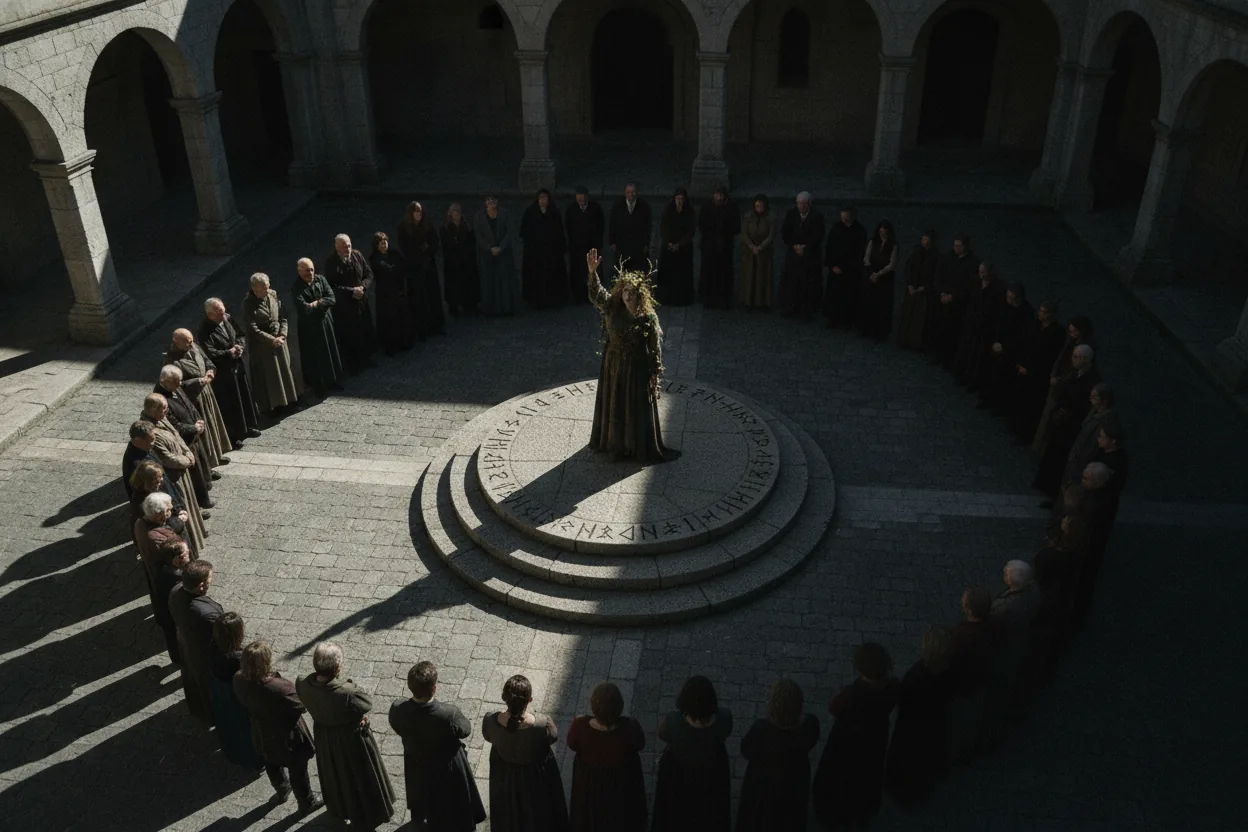
Every great fae court romantasy has one. The trauma moment. The scene where the worldbuilding stops being background lore and becomes a knife in someone’s ribs. And the best ones don’t come from battle. They come from the system working exactly as designed.
The one that lives in my bones rent-free is a scene where a character is forced to publicly renounce a bond. Not because they want to. Because court law demands it. The power is tied to the institution, so when the court elder speaks the dissolution words, you can feel the bond physically tearing. The character doesn’t scream. They don’t fight. They stand perfectly still and let it happen because resistance would mean execution for the person they love.
That’s fae trauma done right. It’s not a villain monologuing. It’s a legal proceeding. It’s bureaucracy with teeth. And it hits so much harder because the system isn’t broken. It’s functioning. The cruelty is the point. The institution was built to prevent exactly this kind of love, and it’s doing its job.
This is what separates worldbuilding that serves the romance from worldbuilding that just sits next to it. When the magic system, the court structure, the inheritance laws all converge on a single moment of personal devastation, you don’t need a dragon attack to raise the stakes. You need a judge. You need a ceremony. You need a rule that everyone follows because the alternative is worse.
And when that trauma moment lands in an MMF dynamic? It’s triple the devastation. Because now you have three people who each process institutional violence differently. One rages. One strategizes. One goes silent. And watching them navigate the aftermath together — trying to protect each other while the system actively punishes their connection — that’s the slow burn that sets my soul on fire.
The Spicy Twist That Changed the Political Equation
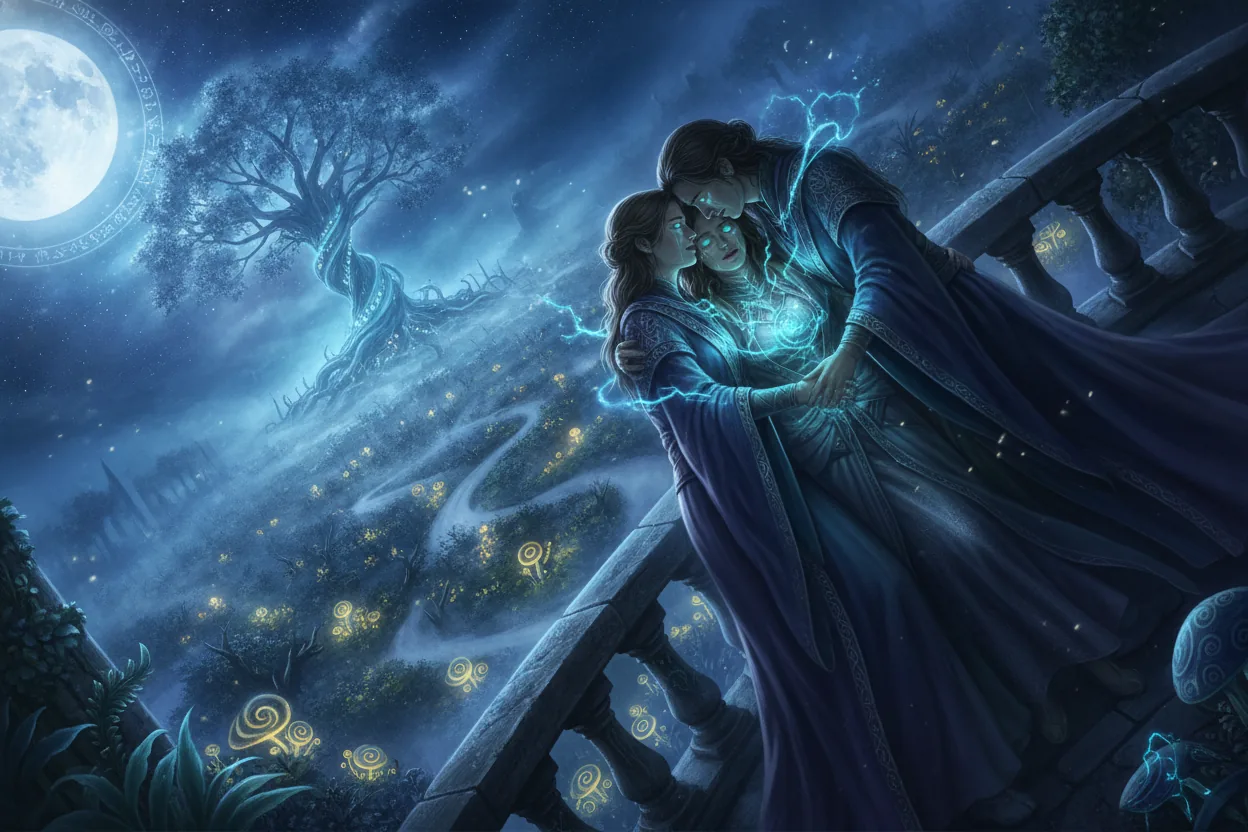
Okay, let’s talk about the spice. Because in fae court romantasy, the intimate scenes aren’t just hot — they’re consequential. And the best spicy twist I’ve encountered recently wasn’t a new position or a surprise kink. It was the revelation that physical intimacy between these three characters activated a dormant magic that hadn’t been seen in centuries. A magic that, according to court prophecy, would signal the fall of the ruling house.
So suddenly, every time they’re together, they’re not just choosing pleasure. They’re choosing revolution. The power that blooms between them during intimacy is literally the thing the courts have been trying to prevent. Their desire isn’t just forbidden. It’s prophetically dangerous.
And the spice itself? It earns its heat because the MMF dynamic means every intimate scene is a negotiation of its own. Who initiates when one of them just survived a political betrayal. Whose hands steady whose. The moment when all three are together and the power flares and they have to decide — do we stop, or do we let this reshape everything? The on-page scenes in the best of these series run scorching, but the heat comes from consequence as much as chemistry. You’re not just reading bodies tangling. You’re reading three people choosing each other so hard that reality literally responds.
C.N. Crawford’s *Fae Spy* series plays in adjacent territory — fae politics, dangerous attraction, power that responds to desire — and if you haven’t read it, consider it your gateway. But for the full MMF-triad-activates-forbidden-magic experience, you want series that commit to all three points of the triangle getting equal heat and equal narrative weight. No sidelined third. No “two plus a guest star.” Three people, equally devastating, equally devastated.
THIS is what I mean when I say the worldbuilding turns romance into high-stakes negotiation. The consent problem in magical bonds becomes real and layered here. Because is this a fated-mates situation? Is the magic choosing for them? Or are they choosing each other and the magic is responding? The series I’m thinking of never gives you a clean answer, and that ambiguity is where the reader debates get delicious.
I’ve seen threads on TikTok arguing about whether this kind of bond undermines free will or amplifies it. Whether the characters would have fallen for each other without the magic, or whether the magic only activated BECAUSE they already felt something real. It’s the destiny-versus-consent debate that fated-mates readers live for, but elevated by a political context that makes the question matter beyond the bedroom. If their bond is fated, does that mean the court system was always doomed? If it’s chosen, does that mean they’re personally responsible for the chaos that follows?
I don’t have an answer. I just have feelings and a Pinterest board with 847 pins.
The Emotional Payoff That Made Me Ugly Cry at 2 AM
The payoff in the best fae court romantasy isn’t the wedding. It’s not the coronation. It’s the moment when a character chooses their people over the institution that claims to represent them. When the heir looks at the two people they love and says, “I’m not choosing between you and the crown. I’m redefining what the crown means.”
In the series I keep coming back to, this moment happens in a public setting. A courtroom. A trial. The heir is supposed to formally sentence one of their lovers for the crime of blood contamination, which is exactly as horrifying as it sounds. Instead, they use their naming power — the gift tied to their bloodline — to dissolve the law itself. Not to pardon. To unmake. To say, “This rule was wrong when it was written, and I have the authority to erase it.”
And the cost is real. They lose standing. They lose allies. They might lose the throne. But they keep the people who matter, and the magic responds by reshaping itself around the three of them in a way the court elders have never seen.
That’s the emotional payoff I chase. Not “love conquers all” in a generic sense. But love as legislative action. Love as institutional reform. Love as the thing that forces a system to evolve because three people refused to let it define them.
I cried so hard my cat left the room.
Why Faction Loyalty Versus Chosen Love Is the Ultimate Romantasy Engine
The thing that ties all of this together is the fundamental tension between belonging and freedom. Fae courts and magic factions work as romantasy architecture because they create groups that characters are born into, bound to, and defined by. Your court isn’t just your address. It’s your magic type, your political affiliation, your family’s reputation, and your marriage prospects all rolled into one.
So when a character falls for someone outside their faction, they’re not just crossing a line. They’re questioning every assumption they were raised on. They’re asking whether loyalty to a group you didn’t choose is really loyalty at all, or just obedience by another name. And the best books don’t make this easy. They give the factions real value. Real community. Real love, even. So leaving isn’t just liberation. It’s loss.
That tension is what keeps me reading at 3 AM. It’s what makes me open Pinterest and search “dark fae court aesthetic” for the fortieth time this month. It’s what drives the ship debates, because when you’re arguing about whether a character should stay with the safe court-approved match or follow the dangerous cross-faction bond, you’re really arguing about what freedom means in a world that wasn’t built to allow it.
Ranking the Top Three MMF Fantasy Series That Do This Best
I’ve been sitting with this for weeks, rearranging my mental ranking, and here’s where I’ve landed.
Third place goes to Elise Kova’s *Married to Magic* series — which nails the magic-faction conflict but doesn’t quite stick the emotional landing in its final act. The worldbuilding is extraordinary. Three courts, each with a distinct magic philosophy, and the MMF dynamic spans all three in a way that makes every alliance scene feel like foreplay. The spice delivers — there’s a scene involving a shared magical bond during a solstice ritual that had me putting my Kindle facedown on the mattress and staring at the ceiling. But the resolution comes too fast, and one of the three love interests gets slightly sidelined in the climax. Still absolutely worth your time, still on my reread list, but it left me wanting one more chapter of emotional processing.
Second place goes to the rival-bloodline series I’ve been losing sleep over — the one with the fire-aligned power and the exiled shadow faction. The inheritance drama is unmatched. The fae trauma moment I described earlier lives here, and the spicy twist with the dormant magic is one of the most creative things I’ve read in the subgenre. The MMF dynamic is balanced in a way that feels genuinely equitable, with each character getting their own arc of political awakening alongside the romance. The intimate scenes escalate in tandem with the political stakes — by book two, you can’t tell where the desire ends and the defiance begins, and the heat level reflects that. It loses the top spot only because the worldbuilding occasionally over-explains itself in ways that slow the pacing during the second book.
First place. The one. The series where fae court politics and romance are so tightly braided that you literally cannot separate them. Where every intimate scene reshapes the political landscape, where every political move has romantic consequences, and where the MMF relationship isn’t just a love story but a new model of governance. The consent-versus-fate debate is woven into every interaction without ever feeling preachy. The trauma is earned. The spice? It builds from charged-glances-across-a-throne-room to full scenes where three people pour every ounce of political defiance into each other’s bodies, and the power that erupts from their connection literally cracks the court’s foundational wards. The payoff made me feel physically different after I finished reading. This is the series I recommend when someone says, “I want romantasy where the worldbuilding actually matters.” It’s the one I press into people’s hands with both fists. ([Find the full list on Goodreads here.](https://www.goodreads.com/list/show/174289))
This Is Why We Curate Entire Identities Around These Stories
I know from the outside it looks like we’re just “reading fairy books.” But the reason fae court romantasy hits different — the reason we build Pinterest boards and argue in comment sections and reread during bad weeks — is because these stories take the biggest questions about autonomy, identity, and belonging and dress them in magic so we can look at them without flinching.
When a fae heir chooses love over inheritance, I feel that in my chest because I’ve made smaller versions of that choice. When a character questions whether a magical bond is destiny or a cage, I’m thinking about every relationship where I couldn’t tell if I was choosing or just following a pattern. When three people build something new in a system designed to keep them apart, I believe a little more that the systems in my world aren’t permanent either.
That’s not escapism. That’s processing. That’s using fiction as a mirror that’s just distorted enough to show you what you couldn’t see straight on.
And that’s why I’ll keep tracking my fae lords, ranking my ships, and losing sleep to the next series that understands that the most romantic thing a world can do is make love genuinely dangerous. Not because of monsters. Because of institutions. Because of names. Because of the weight of a bloodline that tells you who you’re allowed to want, and the earth-shaking defiance of wanting anyway.
I’ll be on my Pinterest board if you need me. I just found a new section for “politically loaded tenderness” and it’s already twelve pins deep.