
He Bled For Her and the Magic Won’t Let Him Heal
*”He bled from his palms every time he shielded her, and she didn’t know until she found the rags he’d been hiding under his bed.”*
I wrote that line as the kind of moment that lives in the marrow of the best romantasy — the sentence you’d underline so hard you’d tear the page. Not a battlefield. Not a throne room. A pile of bloodied cloth shoved beneath a mattress, and a woman realizing the man she’s been fighting with has been destroying himself to keep her breathing. Imagine reading that line in a book that’s already got its claws in you. That’s what inward-stakes magic does. Not a prophecy. Not a dark lord rising. A body paying a price. A secret kept because admitting the toll would mean admitting the feeling behind it.
If you’ve ever closed a book, pressed it against your sternum, and whispered “that’s gonna leave a mark,” you already know what I’m talking about. You just might not have had the name for it yet.
When Magic Hurts the Caster, the Romance Gets Real
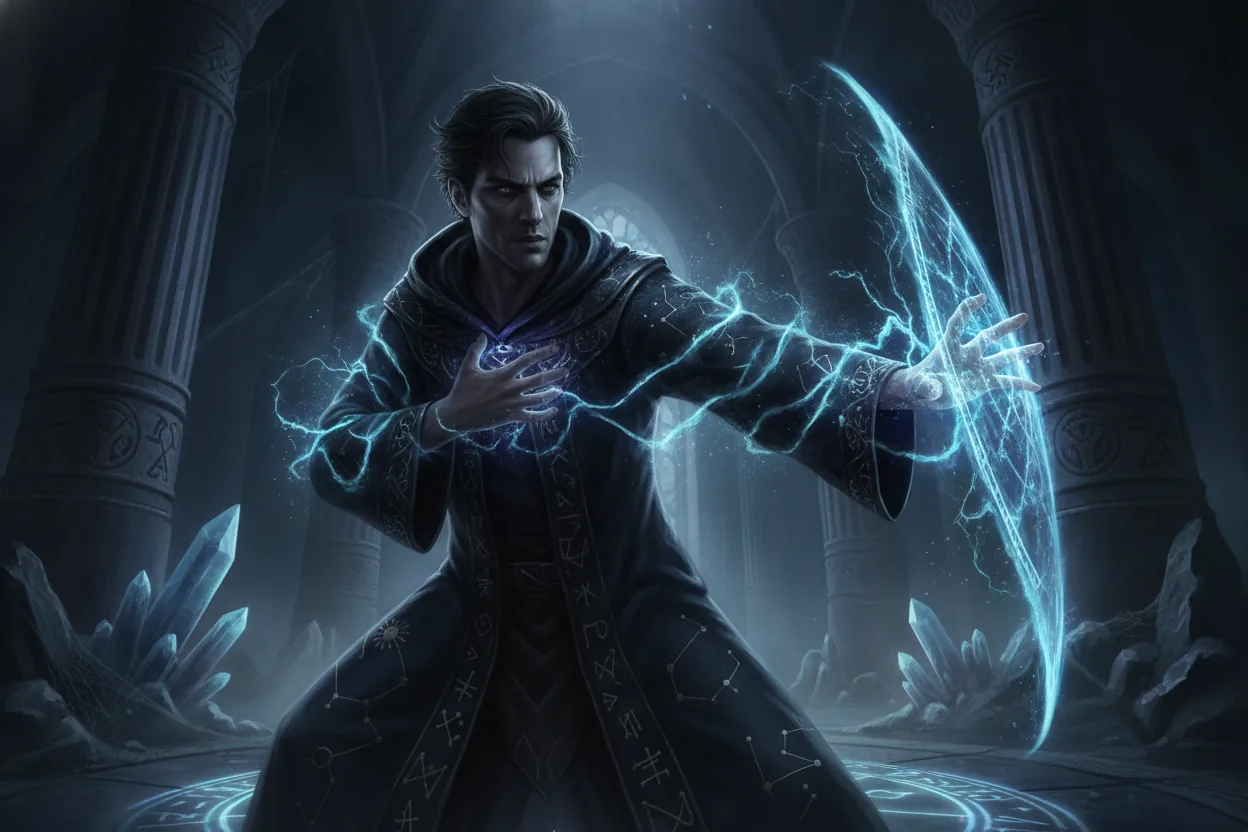
Here’s what I need you to understand about why magic that bleeds inward is rewriting the way we fall in love with romantasy: it makes the romance structurally necessary. Not decorative. Not a subplot running alongside the “real” fantasy plot. The love story becomes the thing the magic needs to survive, and vice versa.
Think about the difference between a hero who can throw fire and a hero who loses a year of his life every time he does it. The first one is cool — sure, fine, impressive. But the second one is devastating, because now every single choice to use that power is a confession, a declaration made with his body, with his lifespan, saying *you are worth dying faster for* without ever opening his mouth. The magic system says it for him.
This is why readers on BookTok keep gravitating toward systems with hard limits, with bodily consequences, with prices that don’t reset between chapters. Because those readers couldn’t care less about power levels — they’re tracking emotional exposure. They want to know what the magic reveals about who someone is when it strips something real away. A fireball is a plot device. A fireball that takes your memories? That’s character development. That’s the kind of worldbuilding that makes you scream into a throw pillow at 2 AM because you realize he used that spell in chapter four and that’s why he couldn’t remember her name in chapter eleven.
The magic becomes the love language. What it takes becomes the proof.
Sacrifice That Sticks to the Bones of the Story
The thing that separates body-cost systems from standard fantasy magic is permanence. Consequences that linger. Not “oh, I’m tired after casting that big spell, let me nap for a page and a half.” I mean consequences that reshape the character’s body, their identity, their capacity for intimacy. The kind of toll that means the person who walks out of chapter twenty is fundamentally different from the person who walked into chapter one, and they can never go back.
This is where romantasy readers live and die. Because a sacrifice that sticks creates something that generic angst can’t: earned vulnerability. When a character’s magic drains their emotional capacity, or fractures their nerve endings, or thins the barrier between their thoughts and their bondmate’s, the intimacy isn’t just spicy. It’s structurally loaded. Every touch carries the weight of what it demands. Every kiss happens in a context where someone is choosing to spend something they can’t get back.
And here’s the part that makes my brain light up: when the sacrifice is bodily, it mirrors the way real emotional vulnerability feels. You know that sensation? The one where you’ve told someone something true about yourself and your skin feels too thin and your chest is exposed and you can’t take it back? Magic that turns inward literalizes that. It puts it on the page in a way that lets you feel it without having to live it. The character’s hands shake after casting. Their vision blurs. They taste copper. Their heartbeat syncs with someone they didn’t choose. That’s not worldbuilding for worldbuilding’s sake. That’s the author encoding emotional truth into the fantasy framework, and readers are responding to it because it feels like being understood — like someone cracked open your ribs and drew a map of every feeling you’ve been too afraid to name.
The Consent Layer Nobody’s Talking About Enough
Let’s go somewhere uncomfortable for a second, because the best inward-stakes systems go here and that’s what makes them transcendent: magic with bodily price raises consent questions that non-magical romance can’t reach.
When a bond forms between two characters and that bond creates shared pain, shared sensation, shared access to each other’s emotions, the story has to reckon with boundaries in ways that feel urgent and specific. It’s not abstract “do you trust me?” dialogue. It’s “I can feel your fear right now and I didn’t ask to and neither did you, so what do we do with this?” It’s “my magic requires your blood to work, and asking for that is asking for something I have no right to, and I need it anyway.” It’s “if I use this power one more time, you’ll feel it too, and I can’t protect you from that.”
This is the territory where romantasy becomes genuinely important fiction, not just escapism. Because these magic systems force characters to negotiate consent, dependency, and trust in situations that don’t have clean answers. And readers aren’t just tolerating that complexity. They’re demanding it. The BookTok comment sections that blow up hardest aren’t the ones debating whether the spice was hot enough. They’re the ones where someone posts “but did she actually agree to the bond or did the magic decide for her?” and three hundred people show up with paragraph-length responses and highlighted kindle screenshots.
The price turns inward, and it gives us the vocabulary to talk about power dynamics in relationships through a fantasy lens — and the readers who live in this genre are using that vocabulary fluently.
Three MMF Series Where the Magic Costs Everything
You want specifics. I have specifics. And I’m giving you the scenes, the lines, and the reader-identity check so you know exactly whether each one is your brand of devastation.
First: C.M. Nascosta’s Morning Glory Milking Farm series. Yes, it’s exactly what the title implies, and no, I will not apologize. What makes this relevant to body-cost magic is how Nascosta builds a world where the characters’ physical natures aren’t superpowers but conditions — needs that are bodily, relentless, and impossible to intellectualize away. There’s a moment early in the first book where Violet is performing what should be a clinical act and realizes, with a full-body jolt she can’t hide, that she *wants* to be here. Not out of obligation. Out of hunger she didn’t authorize. The internal monologue cracks open: she’s rationalizing, bargaining with herself, and the reader watches her lose that negotiation in real time. The intimacy that develops is rooted in characters who have to negotiate what their bodies require versus what their hearts want, and the tension between those two things is where the whole love story lives. The magic isn’t flashy. It’s biological, it strips every character of the ability to pretend they don’t need someone, and the consequences of that pretending are written into their flesh. This is your book if: you’ve ever been undone by the moment someone stopped performing composure and let their need be visible.
Second: K.A. Linde’s House of Dragons series. This delivers an MMF dynamic where the magical inheritance system creates genuine identity crisis. The power doesn’t just pass through bloodlines — it brands the people who carry it, marks them, changes their social position and their relationship to their own autonomy. There’s a scene where Kerrigan stands between two men who are both bound to a system that should make them enemies, and instead of choosing, she says something close to: *I’m not the thing you’re fighting over. I’m the thing you’re both too afraid to fight for.* When two of those characters fall for the same person who exists outside that system, the tension isn’t “who will she choose?” It’s “what does this magic make us, and can we survive what it demands?” The toll is cumulative. It stacks. It doesn’t forgive. This is your book if: you want your love triangle to feel less like a choice and more like a reckoning — one where the magic has already decided the answer and the characters are the last to know.
Third: Amber Argyle’s Witch Song series. While not strictly MMF in the traditional BookTok sense, this delivers a magic system so devastating in what it strips away that I’m including it because the emotional architecture is everything for anyone who wants to understand what happens when magic eats the person using it. The singing magic in this series degrades the caster. It takes pieces of them — not metaphorically, not as a dramatic flourish, but as an operational fact of the worldbuilding. There’s a scene where Brusenna sings a spell knowing it will hollow out a part of her she’ll never recover, and Joshen watches it happen, and his reaction isn’t heroic fury — it’s quiet, nauseated horror. He doesn’t try to stop her. He just catches her when she finishes, and the silence afterward is worse than any argument they’ve had. The romance works because the love interest has to decide whether to let someone he cares about destroy herself for the greater good, and that decision defines every beat of their relationship. The stakes are never “will the world end?” They’re “will she still be herself when this is over?” This is your book if: the romances that wreck you most are the ones where love means witnessing someone’s disintegration and choosing to stay close enough to feel the heat.
If you’re building your reading list around [enemies-to-lovers fae romance](link-to-trope-guide) or want to know [where these land on our spice scale](link-to-spice-breakdown), we’ve got you.
Why Rules Matter More Than Raw Power
There’s a reason the “hard magic system” conversation keeps resurfacing in romantasy spaces, and it’s not because readers want a textbook. Because when the rules don’t change, you know exactly what it takes, and that’s when the dread kicks in.
If you know, from chapter three, that every time a character heals someone they lose sensation in their own hands, then every subsequent healing scene becomes unbearable. Not because you’re surprised. Because you’re watching someone choose, again and again, to give up something irreversible. You’re counting what they’ve spent. You’re tracking what they’ve lost. And when the love interest finally notices, finally grabs those numb hands and holds them, finally says “stop, I’d rather bleed than watch you lose this,” the payoff is so much richer because the rules were clear the entire time.
This is what I mean when I say the system should behave like physics. Not because romantasy needs to be scientifically rigorous. Because consistent consequences create emotional momentum. Every use of magic adds weight. Every sacrifice adds pressure. And when the pressure finally releases — usually in a confrontation scene where someone screams the truth they’ve been hiding behind the magic — the catharsis is earned in a way that inconsistent or convenient magic systems can never achieve.
Readers aren’t asking for simplicity. They’re asking for honesty from the worldbuilding. They want the magic to keep its promises, especially the painful ones.
The Spicy Confrontation Lives Inside the System
Let’s talk about the scene. You know the scene. The one where everything breaks open.
In these stories, the confrontation isn’t a battle. It’s an exposure. It’s the moment when what the magic has taken becomes visible to the person who wasn’t supposed to see it. It’s a shirt pulled aside to reveal scarring. It’s a tremor that can’t be hidden anymore. It’s a bond that flares wide open during an argument and suddenly both characters can feel exactly how terrified the other one is.
This is the scene readers bookmark. This is the scene that gets screenshotted and posted with shaking-hands emojis and seventeen comments that just say “STOP” in all caps. Because the confrontation isn’t about who’s right. It’s about who’s been carrying what, and what it’s stripped away, and whether the other person can handle knowing the truth.
The magic system is doing the heavy lifting here. Without it, this is just a reveal scene. With it, it’s a reveal scene where the evidence is written on the character’s body, where the proof of love is the damage they’ve absorbed, where the anger and the tenderness and the horror all hit at the same time because the magic made the sacrifice legible.
I’ve read this scene in fifty different books and I cry every single time. Not because I’m surprised. Because the weight of every choice that led to this moment is sitting on my chest, and the confrontation is just the point where all that weight becomes undeniable.
Emotional Catharsis That Changes Who They Are
The resolution in the best inward-stakes stories isn’t “the magic gets fixed.” It’s “the characters accept what the magic has made them.” The numbness in the hands doesn’t go away. The bond doesn’t dissolve. The years taken off a lifespan don’t come back. But the characters find a way to live inside those consequences together, and that togetherness becomes the actual happy ending.
This is wildly different from the standard fantasy resolution where the curse breaks or the power ascends or the chosen one fulfills the prophecy and everything resets to equilibrium. Body-cost magic says no. You don’t get a reset. You get a person who chooses to stay even though staying means inheriting part of your damage. And that’s better. That’s more real. That’s the kind of ending that makes you close the book and sit in silence for twenty minutes because it hit a nerve you didn’t know was exposed.
The catharsis isn’t relief. It’s recognition. It’s the feeling of watching two or three people decide that the price is survivable if they carry it together, and knowing that the magic system has made that decision concrete and specific and irreversible.
Community-Native Love for Systems That Wound
Here’s what I love about this readership: you don’t need me to explain why this matters. You already know. You’ve been tagging posts with “touch her and die” and “he would burn the world for her” for years, but the shift happening right now is toward something more specific and more devastating: “he would fracture himself for her, and the magic won’t let the pieces grow back.”
The Pinterest boards are changing. The mood boards are getting darker and more specific. It’s not just crowns and castles anymore. It’s cracked hands and glowing scars and two people pressed together in the aftermath of a spell that took too much. The aesthetic reflects the story, and the story is increasingly about what power takes rather than what power achieves.
This is romantasy growing up. Not away from spice, not away from tropes, not away from the feral joy of a good enemies-to-lovers arc. But deeper into the question of what makes those arcs hit harder. And the answer, over and over, is consequences. Real ones. Ones that change the body and the bond and the self. Ones that make the romance not just desirable but necessary, because the magic has made it so that these people literally cannot survive the toll alone.
This is the worldbuilding equivalent of that moment in a relationship where someone sees the worst of you and stays. It’s the system saying: this is what it takes to love with power, and this is what it takes to love without it, and either way, you’re going to bleed.
And we’re going to read every single page of it with our hearts in our throats.
Ready to go deeper? Check out our [complete MMF romantasy reading order guide](link-to-mmf-guide) or explore [the trope combinations that actually deliver on their promises](link-to-trope-guide). And if you want recs dropped straight into your inbox before BookTok gets to them — [join the Refuge](link-to-newsletter). We don’t gatekeep. We just read faster than everyone else.