
Sentient Magic Romantasy’s Real Question: Who Chose?
The trope hitting me hardest right now isn’t enemies-to-lovers. It isn’t even the mating bond, though she’s still gorgeous and I’ll never quit her. It’s the moment when the magic itself turns its head and looks at the heroine like it chose her. Like it’s hungry. Like it’s been waiting. Sentient magic in romantasy has gone from background lore to the third character in the room, and I cannot stop thinking about whether that makes me swoon or makes my skin crawl.
Because here’s the thing about living magic in fae romantasy: it occupies the exact same nerve as the best [enemies-to-lovers tension](/tag/romance-tropes-and-shippable-chemistry). There’s pull. There’s resistance. There’s the sickening, gorgeous question of whether what you’re feeling is real or manufactured. And if you’ve ever screamed into a pillow because the dark fae lord’s power wrapped around the heroine’s wrist and *purred*, you already know this debate lives in your chest, not your head.
Sentient Magic Is the New Love Interest (And That’s Complicated)
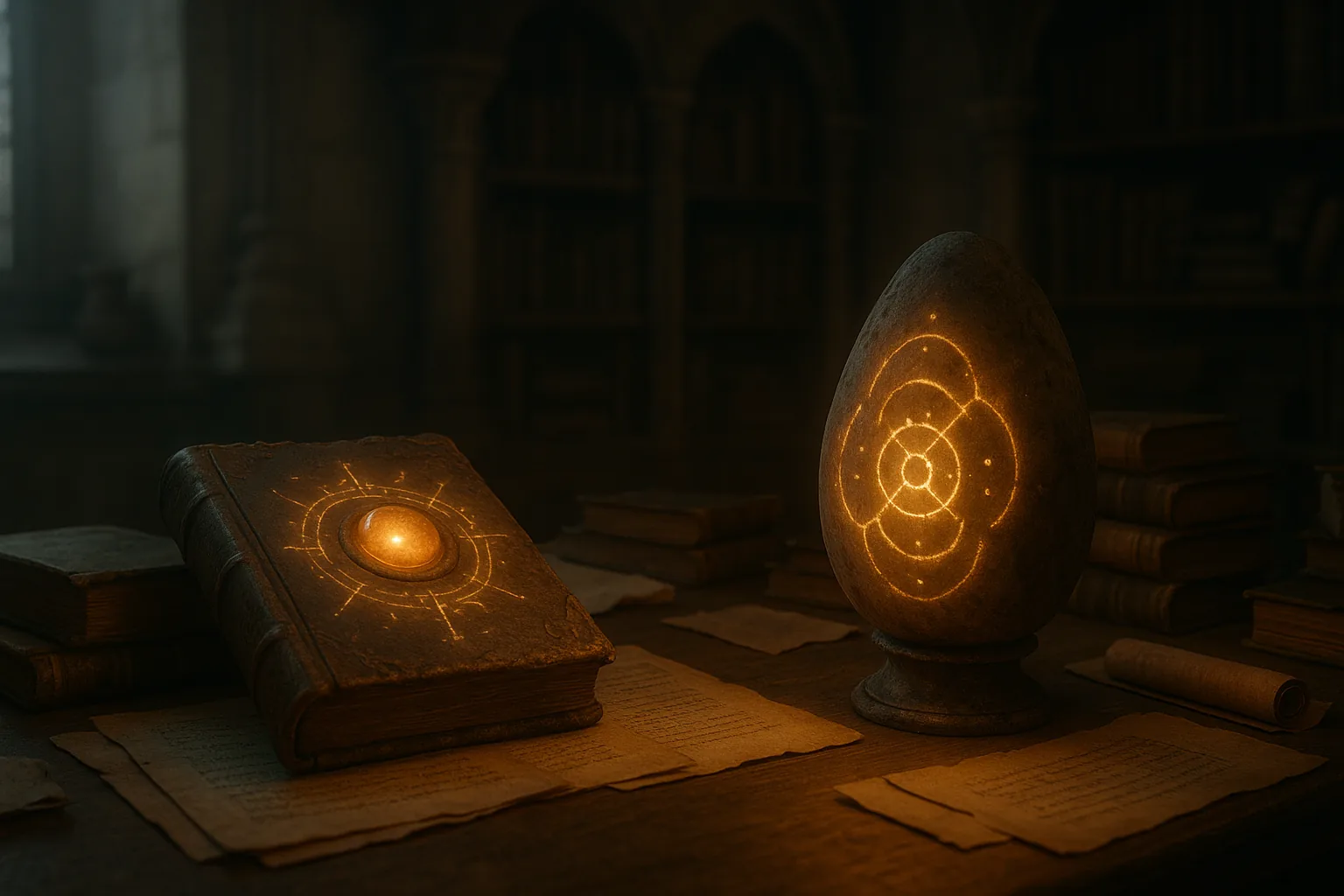
Let’s name what we’re actually talking about. Sentient power in romantasy shows up in at least four distinct flavors, and here’s how I sort them — collapsing them into one thing is how readers end up in arguments that go nowhere.
First, there’s bond-coded magic. This is the [mating bond’s](/mating-bonds-romantasy) older, weirder sibling. The magic recognizes compatibility, lights up between two people, and creates a pull that can range from gentle awareness to full-body obsession. Think the bond mechanics in ACOTAR — the way Rhysand and Feyre’s connection snaps into place and then spends books negotiating what that recognition actually *means.* The magic isn’t a character exactly, but it has preferences, and those preferences reshape the entire power dynamic of the relationship.
Second, there’s companion-coded magic. The power behaves like a sentient familiar, a weapon with opinions, a curse that talks back. Kingdom of the Wicked does this beautifully — Wrath’s magic responds to Emilia in ways that betray what he refuses to say out loud. The force between them has moods. It negotiates. It becomes a translator for the emotional subtext neither character is brave enough to speak.
Third, there’s parasite-coded magic. This is where things get dark and delicious and genuinely unsettling. The magic feeds. It takes something from the host: memory, morality, physical sensation, free will. Gild by Raven Kennedy lives in this territory — Auren’s gold-touch power is entangled with her captivity in ways that make it impossible to separate the gift from the cage. Parasite-coded power doesn’t ask. It attaches. And the romance that grows inside that attachment has to constantly prove itself against the question: *would this exist without the thing consuming me?*
Fourth, there’s lover-coded magic. And yes, I mean that literally. The magic itself becomes the romantic element. It touches like a partner. It responds to desire. It creates sensation that the character didn’t consent to feeling, or did consent to but can’t control. This is where romantasy readers start dividing into camps so fast you can hear the TikTok comment sections igniting.
The reason this conversation matters right now, specifically in [fae enemies-to-lovers romantasy](/fae-court-romance), is that these categories keep bleeding into each other. A bond that starts as recognition becomes a parasite when it punishes distance. A companion-coded sword becomes lover-coded when it sends warmth through the wielder’s body every time she’s near her enemy. The lines are blurry by design, and that blurriness is either the entire point or the entire problem.
The Fae Enemies-to-Lovers Moment That Changed This Debate

You know the scene. You’ve read some version of it forty times and bookmarked it every single time.
She’s standing across from him. He’s the enemy. The court wants her dead or controlled or married off to someone politically useful, and he’s the instrument of that agenda. She hates him. He watches her like she’s a language he’s trying to translate without a key.
And then the magic moves.
Not his magic. Not hers. *The* magic. The ambient, ancient, sentient force woven into the land or the bond or the curse between them. It reaches for her. It slides across her skin without permission. It shows her something: a flash of his grief, the taste of his longing, the specific texture of his need for her. She didn’t ask to feel it. She didn’t consent to knowing him that intimately.
And the line, the one that lives rent-free in every version of this scene, sounds something like: *”The magic doesn’t lie. You can hate me all you want, but your power already chose.”*
That line is a grenade wrapped in velvet.
Because on one read, it’s devastatingly romantic. The idea that something deeper than conscious thought, something woven into the fabric of existence, has recognized the connection between these two people and is screaming it into reality? That’s the drug. That’s what makes readers clutch their Kindles at 2 a.m. and whisper “they’re so canon” into the void. It validates the ship on a cosmic level. It says the universe itself is rooting for them.
On another read, it’s a consent violation wearing a crown. The power told her what he feels without his permission. It touched her without hers. It’s using intimacy as a weapon, and the worst part is that it’s framed as proof of love. “Your power already chose” strips her of the right to choose differently. It collapses the distance between attraction and compulsion, and it does it while looking her in the eye and calling itself destiny.
Why the “Deeper Worldbuilding” Argument Holds (Sometimes)

I want to be fair to the worldbuilding defenders because they aren’t wrong about everything.
Sentient magic systems do create texture that static, rule-based systems can’t touch. When the power has preferences, moods, consequences, and relational dynamics, the world feels inhabited rather than constructed. You stop reading a system and start reading an ecology. The magic isn’t a tool the characters use; it’s a force they negotiate with, and that negotiation creates conflict that pure plot mechanics can’t replicate.
Kingdom of the Wicked earns this. Wrath’s power doesn’t just do things — it *reacts* to Emilia, creating a running subtext that enriches every argument, every loaded glance, every moment where he insists he doesn’t care while his magic is practically screaming the opposite. The companion-coded dynamic gives readers information the characters won’t give each other, and that dramatic irony is catnip.
The ACOTAR bond mechanics work similarly. The mating bond between Rhysand and Feyre doesn’t just connect them — it becomes a site of negotiation. Feyre’s resistance to the bond isn’t punished by the narrative; it’s honored. She gets to feel it pull and still ask *do I want this on my own terms?* That distinction is everything.
Gild takes the harder road. Auren’s power is so entangled with her captivity that the reader can never fully relax into the romance. Is what she feels for Slade genuine desire or the first breath of a woman whose sentient power is finally tasting freedom and attaching it to the nearest source of safety? Kennedy doesn’t resolve that tension cleanly, and the discomfort is deliberate. The worldbuilding *is* the romantic tension.
The best versions of sentient power in romantasy treat the magic’s awareness as a source of tension rather than a shortcut to connection. The bond pulls. The characters resist. The resistance has consequences — sometimes physical pain, sometimes political fallout, sometimes the slow erosion of a boundary they swore they’d keep. But the key, the absolute non-negotiable key, is that resistance remains possible. The character can say no. The no costs something. But it exists.
This is where living magic mirrors the structure of the best enemies-to-lovers arcs. The tension works because both parties have the ability to walk away and neither does. Remove the ability to walk away, and you don’t have tension. You have captivity. And captivity can be a compelling narrative element, but it’s not the same thing as romantic tension, and conflating them is where romantasy starts losing readers instead of gaining them.
When an author writes a sentient magic system where the heroine can feel the pull, name it, resist it, and then choose to step toward the fae lord anyway — not because the power compels her but because she’s decided the terrifying vulnerability is worth it? That’s worldbuilding serving character development. That’s the magic creating a stage for the relationship rather than performing the relationship on the characters’ behalf.
The Consent Problem Nobody Wants to Name Directly
Here it is. Plainly.
When magic in a romantasy novel can alter desire, manufacture attraction, enforce loyalty, punish rejection, or create physical dependence between characters, and the narrative frames this as romantic rather than horrifying, the story has a consent problem. Full stop. It doesn’t matter how beautiful the prose is. It doesn’t matter how hot the fae lord looks while the force does its thing. If the magic is doing the choosing, the characters aren’t.
The romantasy community has gotten sharper about this. “Consent king” as a character descriptor didn’t emerge from nowhere. It came from readers who got tired of watching magical compulsion get dressed up as devotion and sold as peak romance. Readers who noticed that the dark fae lord’s power wrapping around the heroine’s throat was only romantic if she wanted it there, and that wanting it there because the magic *made* her want it there doesn’t count.
Dubious consent in romantasy is a real and valid narrative space. There are readers who specifically seek it out, who want the moral complexity and the discomfort and the power imbalance, and they deserve content that serves them honestly. But the problem isn’t the existence of dubcon-coded magic. The problem is when a book uses magical compulsion to create the appearance of enthusiastic consent and then asks the reader to treat it as genuine. That’s not morally gray. That’s narratively dishonest.
Parasite-coded magic pushes this line the hardest. When the power feeds on the host’s morality, willpower, or sense of self, and the host simultaneously falls in love with the person the magic is connecting them to, the reader has no way to separate the real emotion from the parasitic influence. Some authors want exactly that ambiguity. They’re writing horror-romance hybrids where the uncertainty is the point. But in a straight romantasy marketed with [spicy fae court aesthetics](/tag/spicy-intimacy-and-mood-board-identity) and BookTok mood boards, that ambiguity doesn’t read as intentional craft. It reads as a gap the author didn’t notice.
The MMF Version Hits Different (And Harder)
Let’s talk about the trope’s [MMF expression](/mmf-romantasy-recommendations), because it complicates every single thing I just said in the most fascinating way.
In an MMF enemies-to-lovers fae romantasy, the sentient power isn’t connecting two people. It’s triangulating. The bond has to navigate three sets of desires, three consent thresholds, three different relationships to power. And in the best versions of this, the magic’s behavior reveals the asymmetry between those relationships in ways that would take thousands of words of dialogue to establish.
Imagine: the force reaches for her equally when she’s near either of them, but it behaves differently. With one, it’s warm and slow, a tide pulling her toward shore. With the other, it’s electric, sharp, the kind of pull that feels like fighting. The magic has opinions about the nature of each connection, and those opinions create a map of her desire that she might not have been ready to draw for herself.
Now imagine one of the fae lords can feel the bond’s pull toward both of them but the other can’t. The asymmetry of access to information. One knows the full shape of the connection. The other is operating on instinct, jealousy, and fragments. The thing between them has created an information imbalance that mirrors the power dynamics already present in the enemies-to-lovers tension, and it’s done it without anyone’s permission.
In MMF sentient magic romantasy, the consent question multiplies. Three people have to consent to the bond. Three people have to choose each other, not because the power orchestrated it, but in spite of and alongside and through its influence. The degree of difficulty is higher. The potential for one character’s agency to be subsumed by the other two’s bond is real and terrifying. And when an author pulls it off — when all three characters arrive at the bond through genuine choice, with the magic serving as catalyst rather than architect — it’s the most emotionally layered version of the trope I’ve ever read.
The spicy line in MMF sentient magic sounds something like: *”The bond wants all three of us, but I’m not asking the bond. I’m asking you.”*
That line works because it separates the magic’s desire from the character’s question. It acknowledges the pull and then deliberately sets it aside to center the person. It says: I know the power chose. Now I need to know if *you* did.
Three Tropes That Live in the Same Nerve
If sentient magic as a relationship dynamic is your thing, these three adjacent tropes are going to light up the same part of your brain.
The first is curse-bonded enemies. Think the Serpent & Dove series, where Lou and Reid are bound by a magical obligation that forces proximity between a witch and a witch hunter. The curse has its own logic, its own personality, its own timeline for resolution. The consent tension is built in because the curse removes the option of walking away, and the romance has to happen inside that constraint or not at all. The best part? Reid’s magic actively recoils from Lou’s at first — and watching that revulsion slowly become recognition, then hunger, is enemies-to-lovers at its most visceral.
The second is magic-fueled jealousy. Cardan in The Cruel Prince is the poster child. His power doesn’t just respond to Jude — it responds to threats against what he won’t admit he wants. When fae magic externalizes a character’s possessiveness before they’ve even named the feeling, it becomes a lie detector for desire. The character has to reckon with what their power is revealing about them, and that reckoning is some of the most satisfying tension in the genre. The magic says *mine* while the character’s mouth is still saying *I don’t care.*
The third is symbiotic power exchange. This is where parasite-coded magic gets rehabilitated. If the feeding goes both ways — if both characters gain and lose something in the exchange — the power dynamic shifts from predatory to reciprocal. Feyre and Rhysand’s daemati connection in ACOTAR inches toward this: she can access his mind, he can access hers, and the mutual vulnerability transforms what could be invasive into something that feels like trust made tangible. The power becomes a metaphor for vulnerability in relationship — the idea that loving someone means giving them access to parts of you that could be consumed.
What Makes Sentient Power Feel Intimate Instead of Invasive
The dividing line is simpler than the discourse makes it seem.
Sentient power feels intimate when the character can name what’s happening to them. When they can say “the bond is pulling me toward you and I feel it and I’m choosing whether to follow.” Awareness is the first condition. A character who doesn’t understand that the magic is influencing them can’t meaningfully consent to the influence. The moment of recognition — where the heroine realizes the warmth in her chest isn’t her own emotion but the bond’s projection — is one of the most powerful beats in fae romantasy. It’s the moment she gets her agency back. She can feel the pull and still choose.
Sentient power feels intimate when resistance is possible and respected. Not easy. Not painless. But possible. If the fae lord’s magic wraps around her and she says *stop* and it stops, even if stopping hurts, even if the force itself seems to grieve the withdrawal, then the magic has demonstrated that it recognizes her autonomy. It wanted. She refused. It retreated. That’s a relationship dynamic, not a violation.
Sentient power feels intimate when the story acknowledges the ethical weight. When characters talk about what the bond means, what it’s doing to them, whether they trust it. When the fae lord admits that his magic reaching for her without her permission scares him too. When the heroine asks herself whether what she’s feeling is her or the bond and sits with the uncertainty instead of letting the narrative resolve it prematurely. The discomfort is the point. The willingness to name it is what separates romance from coercion.
Sentient power feels invasive when it replaces character development. When the bond does the work of falling in love so the characters don’t have to. When the magic creates instant intimacy that hasn’t been earned through vulnerability, conflict, communication, or choice. If you took the magic out of the story and the relationship would collapse, the power isn’t serving the romance. It *is* the romance. And a romance between a person and a force that can override their will isn’t a love story. It’s a horror story wearing a flower crown.
The Verdict Is Not a Verdict
I don’t think sentient magic in romantasy is automatically hotter or automatically more unsettling. I think it’s a narrative technology, and like all technologies, it does what the person wielding it designs it to do.
In the hands of an author who understands consent as an ongoing, renegotiated, sometimes messy process, sentient magic becomes the most visceral metaphor for intimacy I’ve ever encountered in the genre. It literalizes the terror of being known. It gives physical form to the question every enemies-to-lovers arc is really asking: *if you could feel exactly what I feel for you, would you still choose to be my enemy?*
In the hands of an author who treats consent as a checkbox rather than a conversation, sentient magic becomes the most elegant coercion mechanism in fantasy. It does the violating while looking beautiful. It calls itself destiny. It tells the heroine she was always going to end up here, and it frames her surrender as inevitability rather than choice.
The difference isn’t the magic. It’s the framing. It’s whether the narrative treats the pull as a question or an answer. A question the characters get to wrestle with, argue about, resist, and eventually respond to on their own terms. Or an answer that was decided before they met, rendering every choice between them decorative rather than meaningful.
I want the magic that asks. I want the bond that reaches and then waits. I want the fae lord whose power curls around my heroine like smoke and then pauses at the boundary of her skin because even ancient, sentient, semi-autonomous magic can learn that wanting someone doesn’t entitle you to them.
That’s not just deeper worldbuilding. That’s the entire philosophy of enemies-to-lovers distilled into a single magical mechanism. The pull exists. The resistance exists. And the story lives in the space between them, where the choice to close the distance means everything precisely because it could have gone the other way.